- All
- Product Name
- Product Keyword
- Product Model
- Product Summary
- Product Description
- Multi Field Search


Views: 0 Author: Site Editor Publish Time: 2026-04-21 Origin: Site


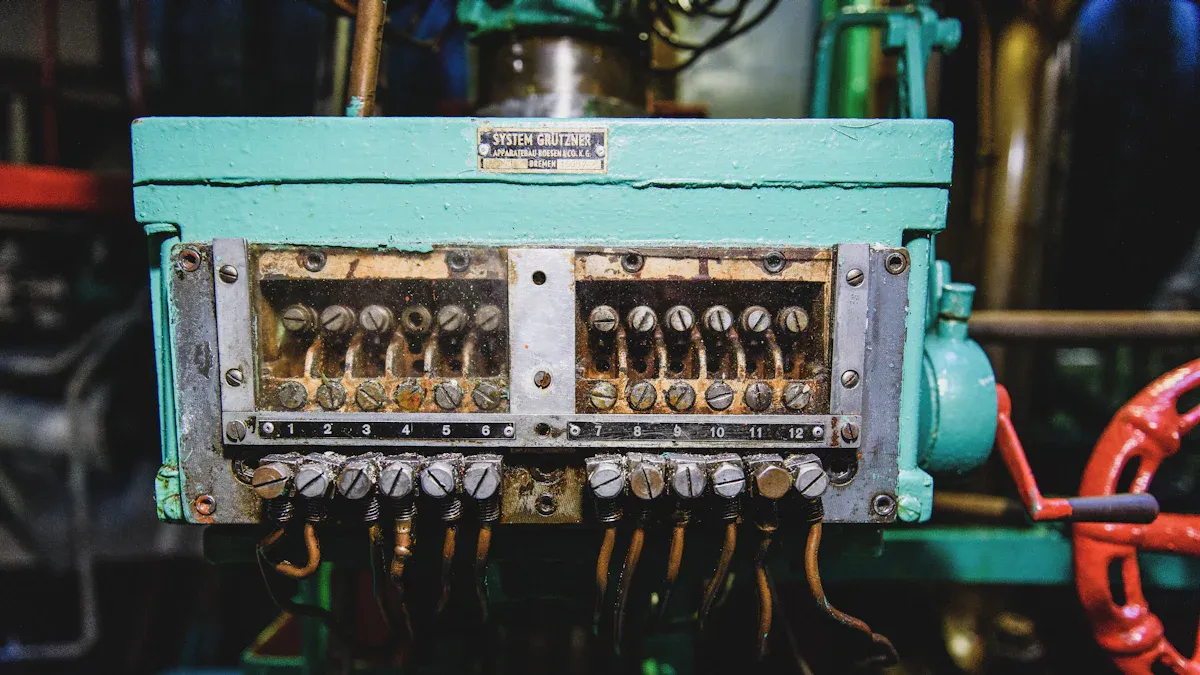
You must follow specific steps to connect three phase motor safely. Begin by turning off the main power and gather all required tools for motor installation. Always use the correct wiring and components for three-phase motor connections. Safety comes first during installation. Pay close attention to each wire and terminal to avoid mistakes. When you work with three-phase motors, double-check every connection to ensure reliable performance.
Always turn off the main power before starting any motor installation to ensure safety.
Gather essential tools like screwdrivers, wire strippers, and a multimeter to facilitate safe and effective connections.
Use the correct wiring and components, such as MCCBs and overload relays, to protect your motor from damage.
Double-check all connections and terminal markings to avoid wiring mistakes that can lead to equipment failure.
Wear personal protective equipment (PPE) like gloves and safety glasses to protect yourself from electrical hazards.
Choose the right connection type (wye or delta) based on your application needs for optimal motor performance.
Inspect all connections after wiring to ensure they are tight and secure, preventing future electrical faults.
Regularly test and verify motor operation to catch issues early and maintain reliable performance.
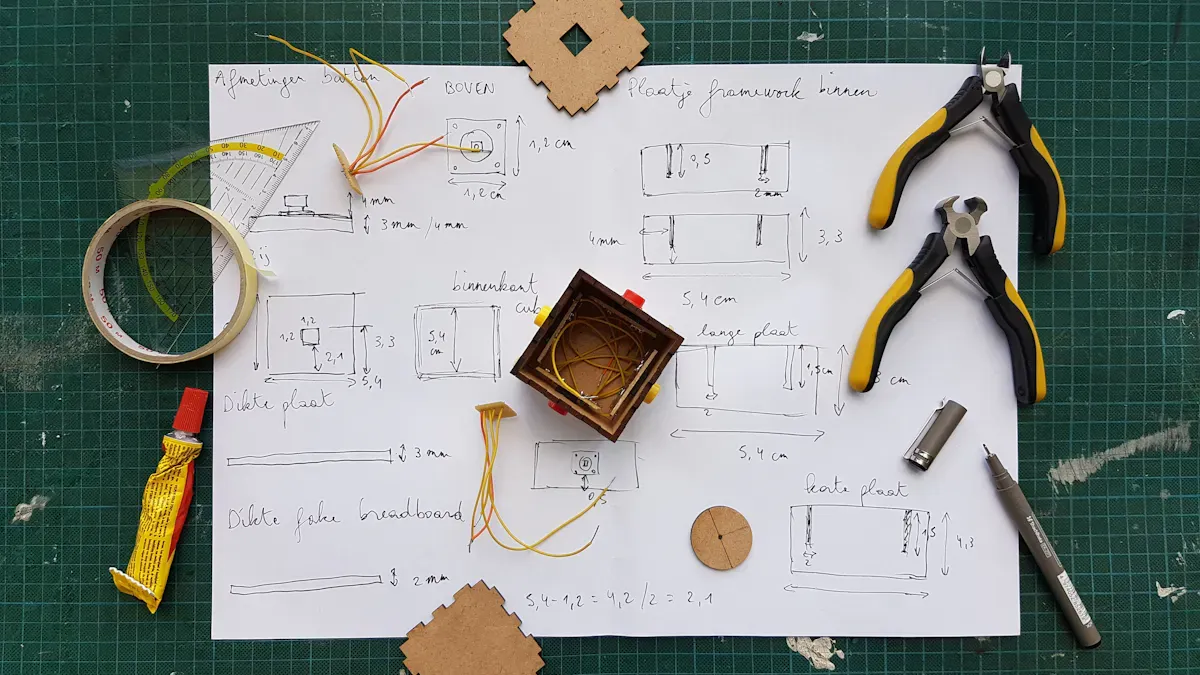
When you start a motor installation, you need the right tools and components. Using the correct equipment makes your connections safe and reliable. You should always check your toolkit before working with three-phase motors.
You need several basic tools for three-phase motor connections. These tools help you handle wires, check electrical values, and secure terminals.
You use screwdrivers to tighten or loosen terminal screws. Choose the right size to avoid damaging the terminals. Flathead and Phillips screwdrivers are common for motor installation.
Wire strippers let you remove insulation from cables. You get clean wire ends for secure connections. Always strip the wire carefully to prevent damage.
A multimeter measures voltage, current, and resistance. You use it to check power supply and verify connections. Many technicians also use clamp-on ammeters and temperature sensors for extra safety checks.
Other frequently used tools in industrial settings include:
Clamp-on ammeters
Temperature sensors
Oscilloscopes
You must use specific electrical components to protect and control your three-phase motor. Each part has a unique function in the wiring process.
The MCCB protects your motor from short circuits and overloads. It acts as the main disconnect and branch circuit protection.
Component | Function |
|---|---|
MCCB | Provides short circuit and overload protection, serving as a main disconnect and branch circuit protection for general purposes. |
A contactor switches the motor on and off. You control the motor remotely and reduce wear on switches.
The overload relay monitors the current flowing to the motor. If the motor draws too much current, the relay trips and stops the motor to prevent damage.
Component | Function |
|---|---|
Overload Relay | Monitors current and trips the system if excessive load is detected, preventing motor damage. |
Terminal connectors join wires to the motor terminals. You use them to make secure and stable connections. Good connectors prevent loose wires and electrical faults.
You can use extra items to improve safety and organization during installation.
Insulation tape wraps around exposed wires. You protect connections from moisture and accidental contact.
Cable ties keep wires neat and organized. You reduce clutter and make future maintenance easier.
Tip: Always organize your tools and components before starting three-phase motor installation. Careful preparation helps you avoid mistakes and ensures safe connections.
When you work with three-phase motors, safety must come first. You protect yourself and your equipment by following important steps before, during, and after motor wiring. Many accidents happen because people skip safety checks or rush through the process. You can avoid most problems by staying alert and using the right methods.
You must always disconnect the main power supply before you touch any wires. This step prevents electric shock and keeps you safe. Use a lockout device or a warning tag to make sure no one turns the power back on while you work. Many electrical codes require you to isolate the test area to avoid accidental contact.
You need to wear the right personal protective equipment every time you handle electrical wiring. Gloves, safety glasses, and insulated footwear protect you from electric shock and flying debris. International electrical codes recommend PPE for all electrical work. You should never skip this step, even for quick repairs.
Tip: Always check your PPE for damage before you start. Replace any worn or broken items right away.
You should never work on motor wiring in wet or damp areas. Water increases the risk of electric shock and can damage the insulation on wires. If you see any moisture, dry the area completely before you begin. Insulating all electrical connections helps prevent short circuits and keeps your installation safe.
You need to double-check every connection before you finish. Loose wires or poor connections can cause serious problems. Many common incidents, such as single-phasing or shorted windings, happen because of bad connections or damaged insulation. Take your time and make sure each wire is secure.
Here is a table of the most common safety incidents during three-phase motor wiring:
Incident Type | Cause Description |
|---|---|
Winding single-phased (wye-connected) | Open in one phase due to blown fuse, open contactor, broken power line, or bad connections. |
Winding single-phased (delta-connected) | Open in one phase, same as wye-connected. |
Winding shorted phase-to-phase | Insulation failure from contaminants, abrasion, vibration, or voltage surge. |
Winding shorted turn-to-turn | Insulation failure from contaminants, abrasion, vibration, or voltage surge. |
Winding with shorted coil | Insulation failure from contaminants, abrasion, vibration, or voltage surge. |
Winding grounded at edge of slot | Insulation failure from contaminants, abrasion, vibration, or voltage surge. |
Winding grounded in the slot | Insulation failure from contaminants, abrasion, vibration, or voltage surge. |
Shorted connection | Insulation failure from contaminants, abrasion, vibration, or voltage surge. |
Phase damage due to unbalanced voltage | Unequal voltage between phases, often from unbalanced loads or poor connections. |
Winding damaged due to overload | Load demands exceed the motor's rating, causing thermal damage. |
Damage caused by locked rotor | Rotor locking leads to potential safety hazards. |
You must inspect all connections after you finish wiring. Look for loose wires, exposed conductors, or damaged insulation. Tighten any loose screws and cover exposed wires with insulation tape. This step helps prevent future problems and keeps your three-phase motor running safely.
Note: Always perform recommended tests, such as insulation resistance and high potential tests, to confirm your wiring is safe and reliable.
By following these safety precautions, you reduce the risk of accidents and equipment failure. Careful preparation and attention to detail make your motor wiring project successful.
When you connect a three-phase motor, you must know how to identify the motor terminals and the power supply lines. This step helps you make the right connections and avoid wiring mistakes.
Manufacturers use standard markings for motor terminals. These markings help you match the motor leads to the correct power supply phases.
You will see the letters U, V, and W on most three-phase motors. These labels show you where to connect each phase wire. U, V, and W represent the three windings inside the motor. You should always check the motor nameplate or wiring diagram before you start. The nameplate gives you important details about voltage, current, and connection type.
NEMA leads the effort to standardize motor performance and operating parameters through its Standard MG-1. This standard defines the markings you see on motor nameplates. Standardization helps you work safely and makes it easier to replace or repair motors.
Here is a quick look at how organizations set these standards:
Organization | Description |
|---|---|
NEMA | Provides guidelines for standardizing motor terminal markings and ensures consistency in motor nameplate information. |
NEC | Specifies required markings for safe installation and operation of motors in various environments. |
The National Electrical Manufacturers Association (NEMA) was established in 1926 to standardize electrical equipment.
NEMA continues to update and publish standards for electrical products, ensuring compatibility and safety.
Tip: Always look for U, V, and W labels before you connect any wires. These labels help you avoid confusion and wiring errors.
Some three-phase motors have six leads instead of three. You may find these leads marked as U1, V1, W1, U2, V2, and W2. This setup lets you connect the motor in either star (wye) or delta configuration. You must follow the wiring diagram for your motor. The diagram shows you how to join the leads for the connection type you need.
You must also identify the power supply lines. Three-phase power uses three separate wires to deliver electricity to the motor.
The power supply lines are usually labeled L1, L2, and L3. Each line carries one phase of the electrical supply. You connect L1 to U, L2 to V, and L3 to W. This setup gives your three-phase motor the power it needs to run smoothly.
You do not need a neutral wire for most three-phase motors. The motor runs on the three live wires only. If you see a neutral wire in the panel, do not connect it to the motor. Using only L1, L2, and L3 keeps the system balanced and safe.
Note: Always double-check the wiring diagram and the nameplate before you connect the power supply. This step helps you avoid costly mistakes.
By learning how to identify motor terminals and power supply lines, you make your installation process safer and more reliable.
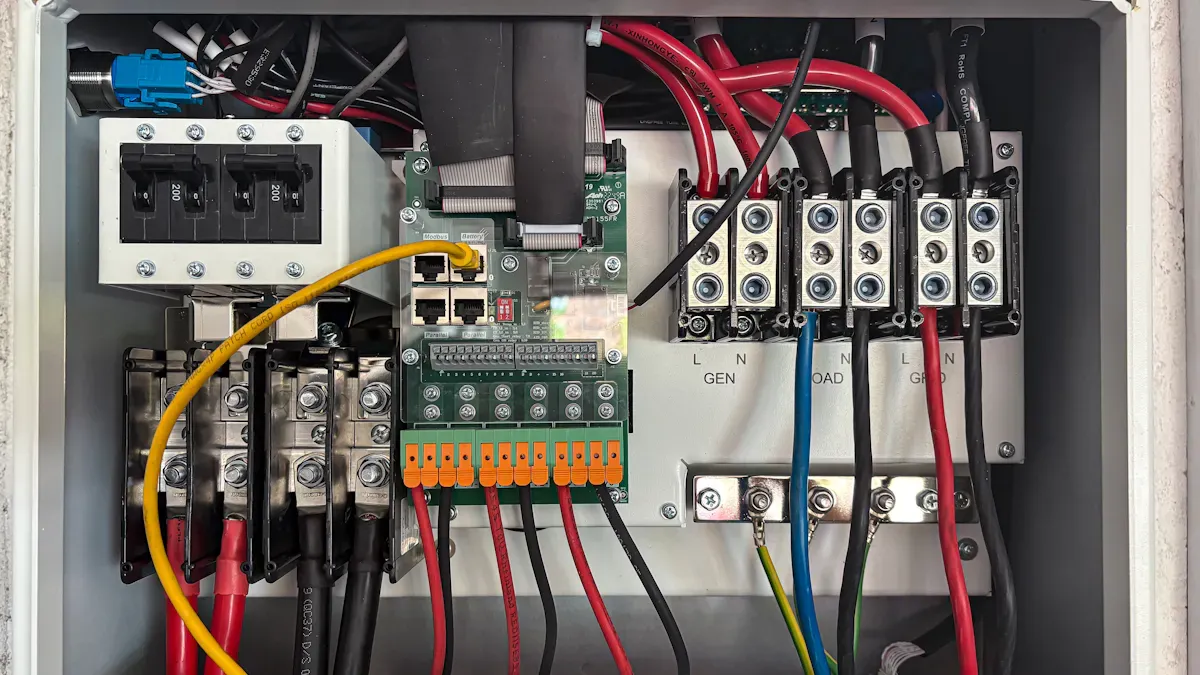
When you connect a three-phase motor, you must understand the two main wiring diagrams: wye and delta. Each method changes how your motor starts and runs. You should always follow the wiring diagram that comes with your motor. This step keeps your installation safe and helps your motor work as expected.
The wye connection is common for starting three-phase motors. You join one end of each winding together to make a central point. The other ends connect to the power supply lines.
You use the wye connection when you want to lower the starting current. This method reduces the current to about one-third of what you get with delta. The voltage across each coil drops to about 58% of the delta value. This setup protects your motor from high inrush currents and helps prevent damage during startup.
Wye connection lowers starting current to about 33% of delta.
Coil voltage drops to 58% compared to delta.
Use wye for applications that need gentle starts.
Some motors have internal wye windings. You cannot change these connections. Other motors let you choose between wye and delta by changing the wiring at the terminal box. Always check your wiring diagram before you connect the leads.
The delta connection links the windings in a triangle shape. Each end of a winding connects to the start of the next. You connect the three power lines to the three corners of the triangle.
You use the delta connection for full voltage operation. This method gives each winding the full line voltage. The motor can deliver more torque at startup. Delta is best for loads that need high starting power.
Delta works well for both low and high voltage systems. You often see delta in industrial machines that need strong and steady power. Always match the connection type to your supply voltage and motor rating.
You must pick the right connection for your job. The choice depends on your application and the information on the motor nameplate.
If your machine needs a soft start, use the wye connection. If you need high torque right away, choose delta. Some starters use wye for starting and switch to delta for running.
Check the motor nameplate for voltage and connection details. The nameplate tells you if you should use wye or delta. Always follow the wiring diagrams from the manufacturer. This step keeps your motor wiring safe and reliable.
Tip: Never guess the connection type. Always use the correct wiring diagram for your three-phase motor.
Connection Type | Starting Current | Coil Voltage | Best Use Case |
|---|---|---|---|
Wye | Low (33%) | 58% | Soft start, low torque |
Delta | High (100%) | 100% | High torque, full load |
You can avoid mistakes by understanding these wiring diagrams. Careful planning and checking help your three-phase motors run smoothly.
Before you connect three phase motor, you need to prepare your workspace and materials. Careful preparation helps you avoid common mistakes and ensures safe connections.
You start by stripping the insulation from each cable end. Use wire strippers to remove just enough insulation so the copper wire is exposed. Clean wire ends allow for strong connections and reduce the risk of poor contact. Make sure you do not nick or damage the wire strands. Damaged wires can cause overheating or unreliable motor wiring.
Tip: Always check the wire gauge before stripping. Undersized wire can lead to overheating and motor failure. Size your motor circuits at 125% of the full-load amperage for best results.
After stripping the cables, inspect the motor terminals. Loose terminals can cause poor connections and lead to electrical faults. Use a screwdriver to tighten each terminal screw. If you see worn or unclear markings, use a multimeter to verify lead identification. This step prevents mixing up lead numbers and ensures you follow the correct wiring diagrams.
Tighten all terminal screws to the manufacturer's recommended torque.
Inspect for corrosion or damage before making connections.
Use properly rated connectors and torque lugs to specification.
You can connect three phase motor in star (wye) configuration for reduced starting current. This method is common in applications where you want a gentle start.
In the star connection, you join the neutral points of the motor windings. If your motor has six leads, connect U2, V2, and W2 together. This forms a central point, often called the star point. Use a secure splice or a terminal block to join these wires. Crimped, soldered, or heat shrink splices work well for high current loads.
Note: Polaris connectors are easy to install and reliable, especially in high vibration environments. They offer insulation for safety and help prevent accidental disconnection.
Next, attach the three supply phases to the remaining terminals. Connect L1 to U1, L2 to V1, and L3 to W1. Make sure each connection is tight and stable. Compression lugs provide a secure fit to terminal blocks and resist mechanical stress. Always verify the supply voltage before connecting the wires. Wiring for the wrong voltage is a common mistake that can damage your three-phase motor.
Use properly rated connectors for each phase wire.
Confirm the wiring diagram matches your motor's nameplate.
Every motor installation requires an equipment grounding conductor.
Delta connection gives your motor full voltage operation and high starting torque. You often use this method for industrial machines that need strong power.
To connect three phase motor in delta, link the terminals in a triangle pattern. For motors with six leads, connect U1 to W2, V1 to U2, and W1 to V2. This forms a closed loop, allowing each winding to receive full line voltage. Use Burndy-Hubbell series connectors for harsh environments. These connectors provide long-lasting performance and resist corrosion.
Double-check the terminal links before attaching supply wires.
Use a multimeter to verify continuity in the delta pattern.
Finally, attach the supply phases to the three corners of the delta. Connect L1 to U1/W2, L2 to V1/U2, and L3 to W1/V2. Make sure each connection is secure and tight. Poor connections can cause overheating and electrical faults. Always check rotation before coupling the motor to the load. Not checking rotation is a frequent mistake during motor wiring.
Tip: Secure all connections with insulation tape or cable ties. Organized wiring reduces clutter and makes future maintenance easier.
Common mistakes during three-phase motor wiring include:
Wiring for the wrong voltage
Mixing up lead numbers
Poor connections
Undersized wire
No overload protection
Ignoring the ground
Not checking rotation before connecting the load
You can avoid these mistakes by following each step carefully and using the right connectors. Reliable connections keep your three-phase motors running safely and efficiently.
After you connect the motor terminals, you need to secure all wiring. This step protects your motor from electrical faults and mechanical stress. You must check every connection and use proper methods to keep wires safe.
You should always tighten every terminal screw. Loose screws can cause poor contact and lead to overheating. Use a screwdriver that fits the terminal size. Turn each screw until it feels firm, but avoid over-tightening. Too much force can strip the threads or damage the terminal block.
Check each terminal for movement after tightening.
Use a torque screwdriver if your motor manufacturer recommends a specific torque value.
Inspect for signs of corrosion or wear before you finish.
Tip: If you see any loose strands of wire, re-strip and reconnect. Secure connections prevent electrical arcing and keep your motor running smoothly.
Here is a quick checklist for tightening screws:
Step | Action |
|---|---|
Select screwdriver | Match size to terminal |
Tighten screw | Turn until firm |
Check movement | Wiggle terminal gently |
Inspect for damage | Look for corrosion or wear |
You need to cover exposed wires with insulation tape. This tape protects against moisture, dust, and accidental contact. Wrap the tape tightly around each connection. Make sure you cover all metal parts. Use high-quality electrical tape that resists heat and abrasion.
Start wrapping from the base of the terminal and move outward.
Overlap each layer for better coverage.
Press the tape firmly to seal the connection.
Note: Insulation tape helps prevent short circuits and keeps your wiring safe during operation.
You can also use cable ties to organize wires. Neat wiring makes future maintenance easier and reduces the risk of accidental damage.
Example:
1. Tighten all terminal screws.
2. Wrap insulation tape around exposed wires.
3. Use cable ties to bundle wires neatly.
When you secure all motor wiring, you protect your equipment and improve reliability. Careful attention to these steps ensures your three-phase motor operates safely for years.
Testing your three-phase motor after wiring is essential for safe and reliable operation. You must follow a step-by-step process to check for problems and confirm that the motor works as expected.
When you power on the motor for the first time, you need to stay alert and observe carefully.
Listen for any strange noises, such as grinding, humming, or clicking. These sounds may signal mechanical issues or electrical faults. If you hear anything unusual, turn off the motor immediately and inspect the connections. You can prevent damage by catching problems early.
Watch the shaft as the motor starts. Make sure it rotates in the correct direction. If the shaft spins the wrong way, you can swap any two supply phases to reverse the direction. Always check rotation before connecting the motor to the load. Incorrect rotation can damage equipment and cause safety hazards.
Tip: Stand clear of the motor during startup. Unexpected movement can pose a risk.
After the initial power-on, you need to confirm that the motor operates within safe limits.
Use a multimeter to measure voltage and resistance at the terminals. Check that the supply voltage matches the motor’s nameplate. Test continuity between windings to ensure electrical connections are intact. You can also perform insulation resistance tests to assess the health of the motor’s insulation.
Measure the current draw while the motor runs. Compare the reading to the value listed on the nameplate. If the current is too high, the motor may be overloaded or wired incorrectly. Running amps tests help you spot problems before they cause overheating or burnt windings.
Here is a standard procedure for testing three-phase motors:
Wear protective gear and prepare tools.
Disconnect power and discharge the motor.
Inspect for visible damage and check shaft condition.
Test continuity between terminals.
Verify incoming power supply.
Measure insulation resistance.
Check running current with a multimeter.
You must protect yourself and others during motor testing.
Keep a safe distance from the motor and any moving parts. Loose clothing or tools can get caught in the shaft. Always use personal protective equipment and follow safety guidelines.
Common Issue | Description | Resolution Steps |
|---|---|---|
Burnt Windings | Overheating, burnt smell, or discoloration | Reduce load, improve ventilation, check connections |
Bearing Failure | Grease leaks, rust, or metal shavings | Replace bearings and inspect shaft |
Moisture Damage | Rust or corrosion | Dry and seal motor, check insulation |
Contamination | Oil, dust, or chemical buildup | Clean motor regularly |
Connection Problems | Loose or discolored terminals | Tighten and clean connections |
Note: Regular testing and inspection help you catch issues early and keep your three-phase motor running smoothly.
When you finish motor wiring, you may still face problems with your three-phase motor. You need to know how to troubleshoot common issues to keep your equipment running safely and efficiently. This section will help you solve the most frequent problems with motor connections.
If your three-phase motor does not start, you should follow a step-by-step approach. Many issues can cause this problem, but you can find the solution by checking each part of the system.
Start by verifying the power supply at the motor terminals. Use a multimeter to check for three-phase voltage. The voltage should be within 2% of the value on the motor nameplate. If you find a blown fuse, tripped breaker, or a missing phase, you may have a single-phasing issue. This is one of the most common reasons for a motor not starting. You should also check the overload relay. If it has tripped, reset it and try again. Make sure the contactor closes and passes voltage to the motor.
Here are the most frequent causes of a three-phase motor not starting:
Single-phasing from a blown fuse, tripped breaker, or bad connection.
Control circuit failure, such as a contactor not closing.
Overload relay tripped due to high current.
Mechanical binding from seized bearings or a jammed load.
After checking the power supply, inspect all connections. Loose or corroded wires can stop the motor from running. Tighten every terminal and look for signs of damage. Test for proper voltage at the contactor output. Try to rotate the shaft by hand to check for mechanical binding. If the shaft does not move, you may have a mechanical problem instead of an electrical one. Measure the current draw on all three phases when you try to start the motor. Uneven current can point to a wiring issue.
Tip: Always disconnect and lock out the power supply before you touch any connections. Wear safety glasses and gloves to protect yourself.
Sometimes, your three-phase motor runs in the wrong direction. This can damage pumps, fans, or other equipment if you do not fix it right away.
You can correct the rotation by swapping any two of the supply wires at the motor terminals. For example, switch L1 with L2. This change reverses the direction of the magnetic field and makes the motor spin the other way. Always check the rotation before you connect the motor to the load. If you use a variable frequency drive (VFD), check for error codes and make sure the VFD wiring matches the manual. Inspect the cooling system and clean the intake filter to prevent overheating.
Here are the steps to fix wrong rotation:
Inspect the wiring and VFD connections.
Swap any two supply phases at the motor terminals.
Test the motor direction before installing shafts or impellers.
Check for VFD error codes if you use one.
You may notice your motor getting hot or making strange noises. These symptoms often point to problems with configuration or loose connections.
Check that you have used the correct wiring diagram for your motor. An incorrect star or delta connection can cause overheating. Look at the motor housing. If it feels too hot to touch, or you smell something burning, you need to act fast. Reduce the load or upgrade to a larger motor if needed. Clean the ventilation passages and cooling fins to improve airflow. If the thermal overload trips often, check for voltage imbalance at the distribution panel.
Symptoms of Overheating | Solutions for Overheating |
|---|---|
Motor housing too hot to touch | Reduce load or upgrade to larger motor |
Thermal overload trips repeatedly | Correct voltage imbalance |
Burnt smell | Clean ventilation and cooling fins |
Loose wires can cause both overheating and noise. Inspect all connections and tighten any loose terminals. Listen for grinding, squealing, or rumbling sounds. These noises may mean you need to relubricate the bearings or replace them. If you see grease leaking, remove the excess. Always keep your connections clean and secure to prevent future problems.
Symptoms of Excessive Noise | Solutions for Excessive Noise |
|---|---|
Grinding, squealing, or rumbling | Relubricate with proper grease |
Increased operating temperature | Replace contaminated bearings |
Grease leakage | Remove excess grease |
Note: Always disconnect the power and use lockout/tagout procedures before you troubleshoot motor connections. Test for voltage with a tester before touching any wires.
When you connect a three-phase motor, you can make mistakes that lead to equipment failure or safety hazards. You need to know the most common errors so you can avoid them. Paying attention to details during motor wiring helps you keep your system safe and reliable.
You might mix up the motor terminals if you rush or skip the labeling step. Each terminal connects to a specific phase. If you connect the wrong wires, the motor may run in the wrong direction or not start at all. You can also damage the windings or cause a short circuit.
To prevent this mistake, always check the terminal markings before you make any connections. Most motors use U, V, and W labels. Some motors have six leads, so you must match U1, V1, W1, U2, V2, and W2 correctly. You should use a wiring diagram and double-check each step. If you feel unsure, use a multimeter to test continuity between terminals.
Here is a simple checklist to help you avoid mixing up terminals:
Read the motor nameplate for terminal information.
Match each supply wire to the correct terminal.
Use colored tape or labels for easy identification.
Test with a multimeter before finalizing connections.
Tip: Take a photo of the terminal box before you start. This gives you a reference if you need to check your work later.
You might feel tempted to skip safety steps when you want to finish quickly. This is a dangerous habit. Skipping safety checks can lead to electric shock, equipment damage, or even fire. You must always disconnect the power before you touch any wires. Wear gloves, safety glasses, and insulated shoes every time you work on electrical equipment.
You should also inspect your tools and personal protective equipment before you begin. If you see any damage, replace the item right away. Never work in wet or damp conditions. Water increases the risk of electric shock. Always keep your workspace dry and organized.
Here is a table of safety steps you should never skip:
Safety Step | Why It Matters |
|---|---|
Disconnect power | Prevents electric shock |
Wear PPE | Protects you from injury |
Inspect tools and PPE | Ensures equipment works properly |
Keep area dry | Reduces risk of shock and short circuit |
Double-check connections | Prevents wiring errors |
Note: Following every safety step protects you and your equipment. You should never rush or ignore these rules.
By avoiding these common mistakes, you make your motor wiring project safer and more reliable. Careful work and attention to detail help you get the best results every time.
You can connect three phase motor safely by following each step in the installation process. Always check insulation for exposed wires and use circuit protection devices. Wear protective gear and disconnect the motor from power before testing. Proper grounding and regular maintenance keep three-phase motors running smoothly. Double-check all connections and test the motor before regular use. Consult the wiring diagram and seek professional help if you feel unsure. For troubleshooting and maintenance, use checklists and guides that cover visual failure indicators and electrical testing.
Recommended resources for three-phase motor wiring and troubleshooting:
Inspection checklists for motor maintenance.
Guides on abnormal sounds and overheating.
Systematic troubleshooting procedures for three-phase motors.
You will see the motor spin in the opposite direction. You can fix this by swapping any two of the supply wires. Always check rotation before connecting the motor to a load.
No, you cannot run a three-phase motor directly on single-phase power. You need a phase converter or a variable frequency drive (VFD) to create the third phase.
Your motor may have a missing phase, loose connection, or a jammed shaft. Check the power supply and inspect all wiring. Remove any mechanical blockage before restarting.
Swap any two of the three supply wires at the motor terminals. This action reverses the magnetic field and changes the rotation direction.
You do not need a neutral wire for most three-phase motors. You only connect the three live wires (L1, L2, L3) to the motor terminals.
Wear insulated gloves, safety glasses, and rubber-soled shoes. These items protect you from electric shock and flying debris.
Inspect motor connections at least once every six months. Tighten loose terminals and look for signs of wear or overheating.
Tip: Regular checks help you prevent unexpected motor failures and extend equipment life.


