- All
- Product Name
- Product Keyword
- Product Model
- Product Summary
- Product Description
- Multi Field Search


Views: 0 Author: Site Editor Publish Time: 2026-01-21 Origin: Site


Are you curious about the power behind industrial machines? Three phase motors are essential for efficient operation in many applications. In this article, we will explore the different types of three phase motors and how to choose the right one for your needs. You'll learn about their importance, features, and practical applications.
Three phase motors operate based on the principles of electromagnetic induction. When a three-phase alternating current flows through the stator windings, it creates a rotating magnetic field. This field is crucial for generating torque in the motor's rotor.
The interaction between the rotating magnetic field and the rotor induces an electric current in the rotor conductors. This process is essential for converting electrical energy into mechanical energy, allowing the motor to perform its intended tasks.
Electromagnetic induction is the backbone of how three phase motors function. As the rotating magnetic field moves, it induces a current in the rotor. This induced current generates its own magnetic field, which interacts with the stator's field, resulting in motion.
This process is efficient and allows for a continuous supply of power, making three phase motors ideal for various industrial applications.
One key aspect of three phase motors is the slip phenomenon. Slip refers to the difference in speed between the rotating magnetic field and the rotor. It is crucial for motor operation because it allows the rotor to catch up with the magnetic field.
Without slip, the rotor would not be able to produce torque. The amount of slip varies depending on the load conditions and is essential for maintaining the motor's efficiency.
Understanding the components of three phase motors helps in grasping their functionality. The main parts include the stator, rotor, windings, and cooling systems.
The stator is the stationary part of the motor, consisting of laminated iron cores and windings. Its design is critical for creating the rotating magnetic field. The windings are arranged in a specific pattern to ensure balanced operation, which is essential for minimizing vibrations.
Rotors come in two main types: squirrel cage and wound rotor.
● Squirrel Cage Rotor: This type is robust and simple, featuring aluminum or copper bars short-circuited at both ends. It's widely used due to its low maintenance and high efficiency.
● Wound Rotor: This rotor contains windings connected to slip rings. It allows for external resistance to be added, providing better control over speed and starting torque.
The rotor interacts with the stator's magnetic field, generating motion and torque.
Windings are crucial for generating the magnetic field in three phase motors. They are typically made of copper and are wound around the stator. The configuration of these windings affects the motor's efficiency and performance.
By varying the number of turns and the arrangement, manufacturers can optimize motors for specific applications.
Effective cooling is vital for the longevity and performance of three phase motors. Common cooling methods include:
● Air Cooling: Utilizes fans to dissipate heat. This method is simple and cost-effective.
● Liquid Cooling: Involves circulating coolant around the motor to absorb heat. It's more efficient for high-power applications.
● Heat Sinks: Attached to the motor to increase surface area for heat dissipation.
These cooling systems help maintain optimal operating temperatures, preventing overheating and ensuring reliability.
Cooling Method | Description | Applications |
Air Cooling | Uses fans for heat dissipation | General industrial use |
Liquid Cooling | Circulates coolant for efficient cooling | High-power applications |
Heat Sinks | Increases surface area for heat dissipation | Used in compact designs |
By understanding how three phase motors work and their key components, you can make informed decisions when selecting and maintaining these essential machines.
Squirrel cage induction motors are among the most widely used types of three phase motors. They feature a simple yet robust design, consisting of a rotor made from aluminum or copper bars. This design offers several advantages:
● Characteristics and Advantages: They are known for their high efficiency, low maintenance needs, and durability. The absence of brushes or commutators minimizes wear and tear, making them ideal for continuous operation.
● Common Applications: These motors are commonly found in various applications, including fans, pumps, and compressors. Their reliability makes them a go-to choice for many industrial processes.
● Efficiency and Maintenance Considerations: Squirrel cage motors typically operate at high efficiency levels, often exceeding 90%. Regular maintenance is minimal, usually involving periodic inspections and lubrication.
● Performance in Steady Speed Operations: These motors excel in applications requiring constant speed. Their design allows them to maintain steady RPM even under varying loads, ensuring optimal performance.
Wound rotor induction motors offer unique features that differentiate them from squirrel cage motors.
● Description and Working Principle: They utilize windings on the rotor connected to slip rings, allowing external resistors to be integrated into the circuit. This design enhances control over motor performance.
● Advantages Over Squirrel Cage Motors: One of the primary benefits is their higher starting torque, making them suitable for heavy-load applications. This feature is especially beneficial in situations requiring significant initial power.
● Typical Applications: Wound rotor motors are often used in elevators, cranes, and other equipment that demand adjustable speed and torque. Their adaptability makes them valuable in various industries.
● Speed Control Capabilities: By adjusting the external resistors, operators can effectively manage the motor speed. This flexibility is essential for applications where speed variation is crucial.
Synchronous motors operate differently from their induction counterparts, providing distinct advantages and challenges.
● Explanation of Synchronous Operation: These motors run at a constant speed, synchronized with the frequency of the power supply. This characteristic makes them ideal for applications requiring precise speed control.
● Advantages and Disadvantages Compared to Induction Motors: While synchronous motors offer higher efficiency and better speed regulation, they can be more complex and costly to maintain. Proper starting procedures are critical to prevent damage.
● Applications in Various Industries: Synchronous motors are widely used in power plants, marine propulsion, and large industrial machines. Their ability to maintain constant speed under varying loads makes them valuable in these settings.
● Constant Speed Operation: Maintaining synchronous speed is vital, especially in applications where load conditions fluctuate. This stability ensures consistent performance and reliability.
Brushless motors represent a modern advancement in motor technology, offering several benefits over traditional designs.
● Overview and Comparison with Traditional Motors: Unlike traditional motors, brushless motors use electronic commutation instead of mechanical brushes. This design results in reduced friction and improved efficiency.
● Benefits of Using Brushless Technology in Three-Phase Motors: Brushless motors require less maintenance due to fewer moving parts. They also provide higher efficiency, making them suitable for applications like electric vehicles and robotics.
Type of Motor | Characteristics | Common Applications | Maintenance Needs |
Squirrel Cage Induction | High efficiency, low maintenance | Fans, pumps, compressors | Minimal |
Wound Rotor Induction | High starting torque, adjustable speed | Elevators, cranes | Moderate |
Synchronous | Constant speed, precise control | Power plants, marine | Higher due to complexity |
Brushless | Reduced maintenance, higher efficiency | Electric vehicles, drones | Low |
Understanding the various types of three phase motors helps in selecting the right one for your specific needs. Each type has its unique advantages and applications, making them suitable for different industrial environments.
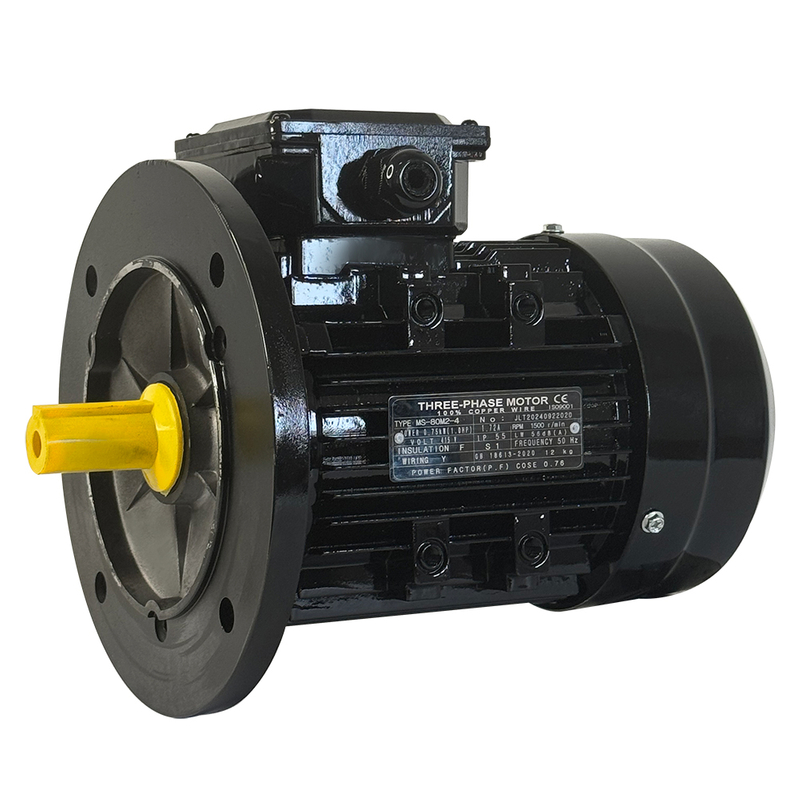
Three phase motors offer numerous advantages, making them a popular choice in various industrial and commercial applications. Their efficiency, performance, durability, and longevity set them apart from other motor types. Let's explore these benefits in detail.
One of the key advantages of three phase motors is their balanced power supply. This balance results in smoother operation and reduced vibrations, which is crucial for applications requiring precision.
● Benefits: A balanced power supply leads to better energy utilization, reducing energy wastage. This efficiency translates into lower operational costs over time.
Three phase motors deliver consistent torque, which is essential for applications requiring steady performance.
● Smooth Operation: The design of these motors ensures that the torque output remains stable, minimizing fluctuations during operation. This characteristic is particularly beneficial in manufacturing processes where precision is critical.
When comparing three phase motors to single-phase motors, the advantages become clear.
● Higher Efficiency: Three phase motors typically operate at higher efficiency levels, often exceeding 90%. In contrast, single-phase motors may struggle to achieve similar efficiency.
● Better Performance: The consistent power delivery of three phase motors results in smoother acceleration and deceleration, enhancing overall performance.
High starting torque is another significant benefit of three phase motors.
● Applications: This feature is especially advantageous in applications like elevators and conveyor systems, where heavy loads need to be moved from a standstill. The ability to generate high torque at startup ensures reliable operation in demanding situations.
Three phase motors are designed for durability.
● Fewer Mechanical Parts: Their construction typically involves fewer moving parts compared to other motor types. This simplicity contributes to their robustness and reduces the likelihood of mechanical failures.
Effective cooling systems play a vital role in extending the lifespan of three phase motors.
● Cooling Methods: Many three phase motors utilize air or liquid cooling systems to dissipate heat efficiently. By maintaining optimal operating temperatures, these systems prevent overheating and enhance motor longevity.
Another advantage of three phase motors is their low maintenance needs.
● Design Benefits: The robust design and fewer moving parts mean less wear and tear. Regular maintenance is minimal, often limited to periodic inspections and lubrication.
Advantage | Description | Impact on Performance |
Efficiency | Higher energy utilization | Reduced operational costs |
Consistent Torque | Stable performance across various loads | Improved precision in operations |
High Starting Torque | Ability to handle heavy loads at startup | Reliable operation in demanding applications |
Durability | Fewer mechanical parts lead to decreased failures | Longer motor lifespan |
Effective Cooling | Maintains optimal temperatures | Prevents overheating |
The advantages of three phase motors make them a preferred choice in many applications. Their efficiency, durability, and low maintenance requirements contribute to their reputation as reliable workhorses in industrial settings.
While three phase motors offer numerous advantages, they also come with certain challenges and limitations. Understanding these drawbacks is essential for making informed decisions when selecting a motor for specific applications.
One of the primary challenges associated with three phase motors is the difficulty in speed control.
● External Devices Required: Unlike some motor types that allow for easy speed adjustments, three phase motors often require external devices like variable frequency drives (VFDs) for effective speed modulation. This adds complexity and cost to the system.
● Implications for Applications: In applications where precise speed control is essential, relying solely on three phase motors without additional equipment can lead to inefficiencies and performance issues.
Three phase motors can experience an initial surge current when starting up.
● Effects on Voltage: This surge can lead to voltage drops in the electrical system, potentially affecting other equipment connected to the same supply.
● Impact on System Stability: In sensitive environments, these voltage fluctuations may cause operational disruptions or even damage to electronic components.
There are specific situations where three phase motors may not be the best choice.
● Startup Situations Needing High Torque: In applications requiring high torque at startup, such as certain types of crushers or mixers, three phase motors may struggle.
● Alternatives Needed: In these cases, other motor types, like wound rotor induction motors, may be more suitable due to their ability to provide better starting torque.
Efficiency losses are another concern when it comes to three phase motors.
● Impact of Slip Losses: Slip is the difference between the synchronous speed of the magnetic field and the actual speed of the rotor. This phenomenon results in energy losses, which can affect overall performance.
● Performance Implications: While three phase motors are generally efficient, slip losses can become significant under certain load conditions, leading to decreased efficiency and increased operational costs.
Disadvantage | Description | Impact on Performance |
Difficulty in Speed Control | Requires external devices for adjustments | Increased complexity and cost |
Initial Surge Current | Causes voltage drops during startup | Potential system instability |
Specific Applications Limitations | May not be suitable for high torque startup needs | Alternative motor types needed |
Efficiency Losses | Slip losses affect overall performance | Increased operational costs |
While three phase motors are highly efficient and durable, these disadvantages must be considered. Understanding the limitations helps ensure the right motor is chosen for your specific needs, optimizing performance and reliability in various applications.
This article provides a comprehensive overview of three phase motors. It summarizes the various types, selection criteria, advantages, and maintenance considerations. Choosing the right motor is crucial for ensuring efficiency and reliability in applications. It's important to consider factors like power rating, efficiency, and environment. For expert guidance, consulting professionals is recommended. At Julante, our products offer unique advantages, ensuring high performance and durability for your needs. Explore how our solutions can add value to your operations.
A: Three phase motors are electric motors powered by three alternating currents. They provide efficient and reliable performance for various applications.
A: Consider factors like power rating, efficiency, load characteristics, and operating environment when selecting three phase motors.
A: Three phase motors offer high efficiency, consistent torque, and durability, making them ideal for industrial applications.
A: Three phase motors provide smoother operation, higher efficiency, and better performance under varying loads compared to single-phase motors.
A: The cost of three phase motors varies based on power rating and features, but they generally offer long-term savings through efficiency.
A: Common troubleshooting steps include checking for electrical supply issues, inspecting connections, and ensuring proper cooling and maintenance.


