- All
- Product Name
- Product Keyword
- Product Model
- Product Summary
- Product Description
- Multi Field Search


Views: 0 Author: Site Editor Publish Time: 2026-04-24 Origin: Site


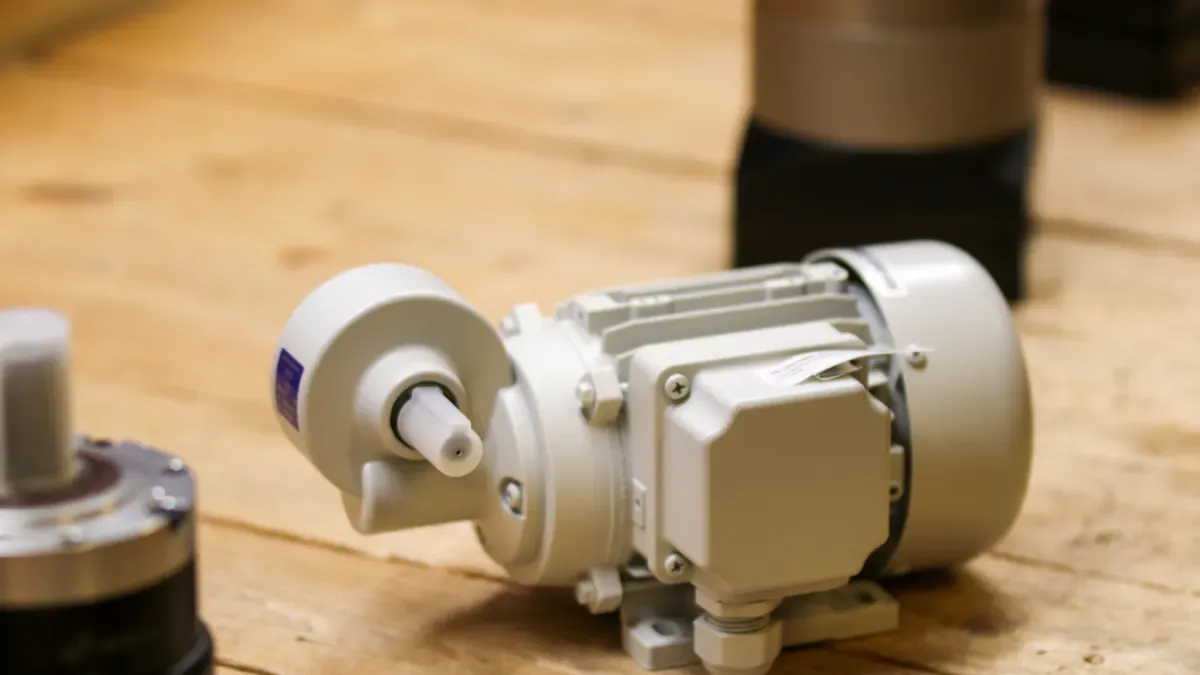
A three phase motor works by using three phase power to create a rotating magnetic field that makes the rotor spin. You find two main parts inside: the stator, which stays still and creates the magnetic field, and the rotor, which turns when that field moves. This design gives you a motor that starts on its own, runs smoothly, and lasts longer.
Here is how three phase motors compare to single phase motors:
Advantage | Three-Phase Motors | Single-Phase Motors |
|---|---|---|
Efficiency | Higher efficiency ratings, up to 96% (IE4) | Lower efficiency, struggles under load |
Electrical Losses | Reduced electrical losses | Higher electrical losses |
Performance Under Load | Improved performance under fluctuating loads | Limited performance under load |
Starting Torque | Higher starting torque | Lower starting torque |
Lifespan | Longer lifespan due to balanced power | Shorter lifespan |
Three phase motors use three phase power to create a rotating magnetic field, allowing for smooth and efficient operation.
The 120-degree phase difference in three phase power ensures a constant flow of energy, reducing vibrations and wear on the motor.
Three phase motors are more efficient than single phase motors, achieving efficiency ratings up to 96%, which saves on energy costs.
These motors provide higher starting torque and better performance under load, making them ideal for heavy machinery and industrial applications.
The interaction between the stator's rotating magnetic field and the rotor generates torque, enabling reliable motion for various machines.
Regular maintenance, including checking bearings and electrical connections, is crucial for maximizing the lifespan and efficiency of three phase motors.
Three phase motors are widely used in industries such as manufacturing, construction, and power generation due to their reliability and energy efficiency.
Using variable frequency drives with three phase motors allows for precise speed control and further enhances energy savings.
You might wonder what makes three phase power different from the electricity you use at home. Three phase power is a special system that delivers three separate alternating currents. Each current flows through its own wire, and each one reaches its highest voltage at a different time. Power plants generate this type of electricity using a rotor and a stator. The rotor spins inside the stator, which has three sets of windings. These windings are spaced so that the voltages they produce are always 120 degrees apart. This setup means that at least one wire always carries power near its peak, so you get a steady flow of energy. Three phase power is the main source for running large machines and motors in factories and big buildings.
The 120-degree phase difference is the secret behind the smooth operation of three phase motors. Each of the three currents reaches its peak at a different time, spaced evenly across the cycle. This timing creates a constant flow of power. You do not see the stops and starts that happen with single-phase systems. The steady energy helps the motor run without jerks or vibrations. You get a rotating magnetic field inside the motor, which is essential for making the rotor spin smoothly. This design also means less wear and tear on the motor, so it lasts longer.
Tip: The 120-degree phase difference is why three phase motors can start by themselves and keep running without extra help.
Three phase power offers many advantages when you use it with electric motors. Here are some key benefits:
You get smoother and more efficient operation compared to single-phase motors.
Three phase motors can handle heavy machinery and industrial equipment with ease.
The design allows for simpler control systems and less vibration during operation.
You can see the differences in the table below:
Feature | Single-Phase Power | Three-Phase Power |
|---|---|---|
Efficiency | Less efficient for high power loads due to pulsation | More efficient for high power loads with continuous flow |
Motor Performance | Simpler design, torque pulsations affect performance | Smoother operation, higher efficiency, better torque |
Power Capacity | Limited power capacity | Over 150% more powerful than single-phase motors |
Operational Noise | Typically noisier | Less noisy to operate |
Longevity | Shorter lifespan | Longer lifespan than single-phase motors |
When you choose a three phase motor, you get more power, better performance, and a longer-lasting machine. This is why factories and workshops rely on three phase motors for their most important jobs.
When you power up a three phase motor, you use a principle called electromagnetic induction. This principle explains how electricity and magnetism work together to create motion. Here is what happens inside the motor:
The stator receives three phase power and creates a rotating magnetic field.
This field moves around the inside of the motor and passes over the rotor.
As the field sweeps by, it induces a voltage in the rotor.
The voltage causes a current to flow through the rotor.
The current in the rotor produces its own magnetic field, which interacts with the stator’s field.
You can see that electromagnetic induction is the reason the rotor starts to move. The process begins as soon as you apply power, so the motor starts on its own without any extra help.
The rotating magnetic field is the heart of every three phase motor. You create this field by sending three phase electricity into the stator windings. Here is how the field forms:
Three coils in the stator receive power from the three phase supply.
Each coil gets its current at a different time, spaced 120 degrees apart.
The combined effect of these currents produces a magnetic field that stays the same strength but rotates smoothly around the stator.
The speed of this rotation matches the frequency of the power supply.
The direction of the field depends on the order of the phases.
This rotating field is what makes three phase motors so reliable and efficient. You get smooth, continuous motion without any jerks or stops.
The stator and rotor work together to turn electrical energy into mechanical motion. Here is how their interaction creates rotation:
The stator generates a rotating magnetic field when you apply three phase power.
As the field moves, it induces an electromotive force (EMF) in the rotor.
The EMF causes current to flow in the rotor, which creates a second magnetic field.
The two magnetic fields interact, producing torque that turns the rotor.
The rotor always tries to catch up with the rotating field, so it keeps spinning as long as the motor is powered.
This teamwork between the stator and rotor is what allows the motor to drive pumps, fans, and other machines in factories and workshops.
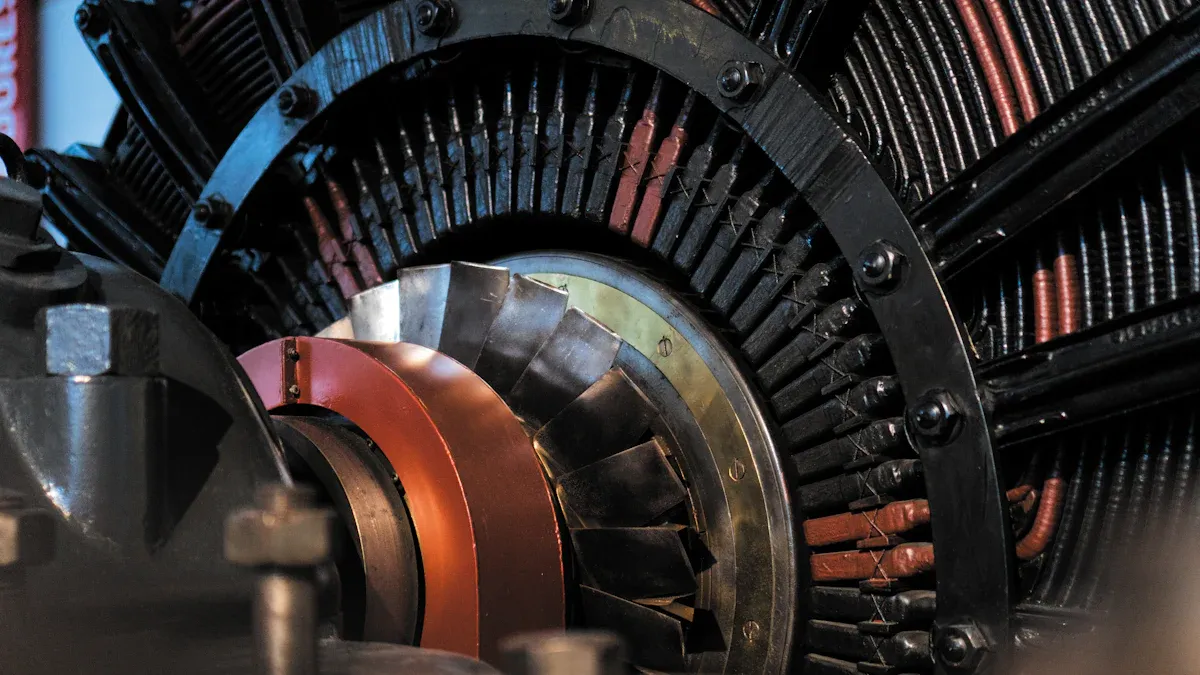
Understanding the main parts of a three phase motor helps you see how each piece works together to create reliable motion. Each component has a specific job that keeps the motor running smoothly and efficiently.
Component | Function |
|---|---|
Stator Frame | Provides support to the stator core and winding, offers mechanical strength, and aids in cooling. |
Stator Core | Carries alternating magnetic flux, minimizes hysteresis and eddy current losses through lamination. |
Stator Winding | Generates magnetic field when supplied with three-phase current, determines motor speed based on pole number. |
Rotor | Rotating part of the motor, classified into squirrel cage and phase wound types. |
You find the stator windings inside the stationary part of the motor. These windings are coils of wire arranged in slots around the stator core. When you supply three phase current to these windings, they create a rotating magnetic field. The number of poles in the windings sets the speed at which this field rotates. More poles mean a slower rotating field, while fewer poles mean a faster one. The stator windings play a key role in how much power the motor can deliver and how efficiently it runs.
The rotor sits inside the stator and spins when the magnetic field moves. You will see two main types of rotors in three phase motors:
Most three phase motors use a squirrel cage rotor. This type gets its name from its shape, which looks like a hamster wheel or cage. You find bars of aluminum or copper set into grooves and connected at both ends by rings. This design gives you a rotor that is strong, reliable, and cost-effective. Squirrel cage rotors need little maintenance and work well in most industrial settings.
A wound rotor, also called a slip ring rotor, uses coils of wire instead of solid bars. You can connect external resistors to these coils through slip rings. This setup lets you control the starting torque and acceleration of the motor. Wound rotors are less common, but you might use them when you need high starting torque or smooth speed control.
Tip: Squirrel cage rotors are simpler and more common, while wound rotors offer more control during startup.
Bearings and housing keep the moving parts of the motor aligned and protected. Bearings reduce friction between the spinning rotor and the stationary parts. This helps the motor run smoothly and last longer. You need to check the bearings regularly because poor lubrication or electrical issues can cause them to fail. The housing supports the stator and rotor, protects them from dust and moisture, and helps cool the motor during operation. Good housing design and proper bearing care both play a big part in the motor’s efficiency and lifespan.
Bearings reduce friction and wear, which helps the motor last longer.
Proper grounding and maintenance prevent electrical damage to the bearings.
Regular checks and lubrication keep the bearings working well and avoid costly breakdowns.
You will find the terminal box mounted on the outside of most three phase motors. This small but important part acts as the main hub for all electrical connections. When you open the terminal box, you see several terminals or connection points. These terminals connect the stator windings inside the motor to the external power supply. You use the terminal box to make sure the motor receives the correct three phase power.
The terminal box gives you a safe and organized space to work with the motor’s wiring. You do not have to worry about loose wires or exposed connections. The box protects the terminals from dust, moisture, and accidental contact. This safety feature helps prevent electrical shorts and keeps you safe during installation or maintenance.
You can also use the terminal box to change how the motor operates. Most three phase motors allow you to configure the stator windings in either a star (Y) or delta (Δ) connection. The way you connect the wires inside the terminal box determines the motor’s voltage and current characteristics. For example, you might use a star connection for high voltage and a delta connection for low voltage. This flexibility lets you match the motor to different power supplies or application needs.
Tip: Always check the wiring diagram inside the terminal box cover before making any changes. This diagram shows you the correct way to connect the wires for star or delta operation.
You will often see a rubber gasket or seal around the edge of the terminal box cover. This seal keeps out water and dust, which helps the motor last longer. Some terminal boxes include cable glands or strain reliefs. These features hold the incoming power cables firmly in place and prevent them from pulling on the internal connections.
Here is a quick summary of what the terminal box does for you:
Provides a secure place for all electrical connections.
Protects the wiring from environmental hazards.
Allows you to select star or delta winding configurations.
Makes installation and maintenance easier and safer.
Feature | Purpose |
|---|---|
Connection Terminals | Link stator windings to power supply |
Star/Delta Links | Enable voltage and current configuration |
Protective Cover | Shields connections from dust and moisture |
Cable Glands | Secure and protect incoming power cables |
When you work with three phase motors, you will use the terminal box for almost every wiring task. Understanding how it works helps you set up the motor correctly and keep it running safely.
You start the operation of a three phase motor by connecting it to a three-phase power supply. This supply uses three separate alternating currents. Each current flows through its own wire and reaches its peak at a different time. The three phases are spaced 120 degrees apart. This arrangement gives you balanced and efficient power distribution. You connect each phase to a set of windings around the stator. The stator is the stationary part of the motor. When you energize these windings, you create a steady flow of electricity. This steady flow helps the motor run smoothly and reduces electrical losses.
Three-phase power operates on three separate phases of alternating current.
Each phase supplies power to evenly spaced windings around the stator.
The 120-degree phase difference allows for balanced power and smoother operation.
The power supply creates a rotating magnetic field, which is essential for generating torque and rotation.
You see this setup in most industrial machines because it gives you reliable performance and high efficiency.
When you energize the stator windings with three-phase power, you create a rotating magnetic field. This field is the secret behind the operation of every ac induction motor.
The electric current set up in the stator windings causes a rotating magnetic field in the stator. This rotating field is the secret behind the operation of all induction motors.
The rotating magnetic field moves around the inside of the stator. The speed of this field depends on the frequency of the power supply and the number of poles in the stator windings. You can change the direction of the field by switching the order of the phases. This rotating field is what makes the rotor spin and gives the three phase motor its self-starting ability.
The rotating magnetic field interacts with the rotor inside the motor. You see the process happen in several steps:
The stator windings are energized by a three-phase voltage source.
The rotating magnetic field is created and sweeps across the rotor.
This field induces voltage in the rotor conductors.
The induced voltage causes current to flow in the rotor.
The current generates a magnetic field in the rotor.
The rotor's magnetic field interacts with the stator's field to produce torque.
You notice that the rotor always tries to catch up with the rotating magnetic field. This interaction produces the force needed to turn the shaft. The process works the same way in every ac induction motor. You get smooth and reliable rotation, which is why three phase motors are used in factories and workshops.
You see the real magic of a three phase motor when torque turns into motion. Torque is the force that makes the motor’s shaft spin. This force comes from the interaction between the magnetic field in the stator and the magnetic field created by the induced current in the rotor.
When the stator’s rotating magnetic field sweeps past the rotor, it causes electric currents to flow inside the rotor bars. These currents create their own magnetic fields. The two magnetic fields push against each other. This push is what produces torque. The stronger the induced current in the rotor, the more torque you get. If the rotor slows down or faces a heavy load, the difference in speed between the stator’s field and the rotor increases. This difference causes more current to flow in the rotor, which boosts the torque. This process follows the principle of electromagnetic induction. The rotor must always run a little slower than the stator’s magnetic field. If the rotor ever caught up, the induced current would stop, and the motor would lose its torque.
You can think of the process in these steps:
The stator creates a rotating magnetic field.
The field induces current in the rotor.
The rotor’s current produces its own magnetic field.
The two magnetic fields interact and generate torque.
The torque turns the rotor and the attached shaft.
Tip: The amount of torque depends on the load. If you increase the load, the rotor slows down slightly, which increases the induced current and gives you more torque to keep things moving.
You use this torque to drive machines, pumps, fans, and many other devices. The smooth and steady rotation of the shaft is why three phase motors work so well in industry. You get reliable power and efficient performance every time you switch on the motor.
You can think of the winding arrangement as the blueprint for how your motor works. The way you arrange the coils inside the stator affects how much power your motor can deliver and how efficiently it runs. When engineers tested new winding designs, they saw impressive results:
Output power increased by 19.32%.
Efficiency improved by 16.26%.
Load torque went up by 18.48%.
Rotor speed rose by 0.72%.
You do not need to spend much more money to get these benefits. A better winding design can boost your motor’s performance without adding significant cost. Some modern motors use ferrite material on the rotor. This change reduces losses and makes the motor even more efficient. You also get a better power factor, which means your motor uses electricity more wisely.
Note: The right winding arrangement can make your motor stronger, faster, and more energy-efficient.
The number of poles in your motor decides how fast it spins and how much force it can create. You find poles by looking at how the windings are grouped inside the stator. If your motor has more poles, it will turn slower but produce more torque. This feature helps when you need a lot of force, like in cranes or elevators, without using extra gears.
For example, a motor with two poles spins much faster than one with eight poles. The slower speed from more poles gives you more pulling power. You can match the number of poles to your job. If you need speed, choose fewer poles. If you need strength, pick more poles.
Number of Poles | Typical Speed (RPM) | Torque Output | Common Use |
|---|---|---|---|
2 | ~3000 | Lower | Fans, pumps |
4 | ~1500 | Medium | Compressors, conveyors |
6 | ~1000 | Higher | Hoists, heavy machinery |
8 | ~750 | Highest | Cranes, elevators |
You have several ways to control the speed of a three phase motor. Some motors use special windings, slip rings, and brushes on the rotor. You can change the strength of the rotor’s magnetic field to adjust the speed. Automated systems can even change the field strength as the load changes, so your motor always runs at the right speed.
Today, most factories use electronic motor controllers. These devices change the frequency and voltage of the power supply. By adjusting these settings, you can make the motor start and stop smoothly. You also protect the motor from overheating because these controllers include thermal overload protection. If you need very precise speed control, you can fine-tune the frequency and voltage.
Motor controllers give you smooth starts and stops.
They help prevent damage from overheating.
You can achieve high-precision speed control with electronic drives.
Some older motors use wound rotors for speed control. You can vary the rotor’s magnetic field to change the speed. However, electronic variable-frequency drives have become more popular because they are easier to use and more reliable.
Tip: If you want the best speed control, look for a motor with a variable-frequency drive. This setup gives you flexibility and protects your equipment.
By understanding winding arrangement, number of poles, and speed control, you can choose the right three phase motor for your needs. You get the best mix of power, efficiency, and control.
You get impressive efficiency when you use a three phase motor. The design allows for smoother power delivery because the three power lines are spaced 120 degrees apart. This setup means the motor runs with less vibration and fewer energy losses. Most three phase motors reach efficiency levels between 90% and 96%, which is much higher than single-phase motors that usually stay between 70% and 85%. You save money on energy bills because the motor converts more electricity into useful work.
You also benefit from high reliability. The solid construction resists wear and tear, so you do not have to worry about frequent breakdowns. Many three phase motors use aluminum parts, which help remove heat quickly and keep the motor cool. The lack of brushes and commutators means there are fewer parts that can fail. You can run these motors for long periods without stopping, which is perfect for factories and large buildings. If you size the motor correctly and keep up with maintenance, you will see even more energy savings and fewer repairs.
Tip: Using a three phase motor with a variable speed drive can boost efficiency and lower your energy costs even more.
You see three phase motors in almost every major industry. They power conveyor belts, pumps, compressors, and heavy machinery. You find them in manufacturing plants, construction sites, and power generation facilities. The balanced power supply ensures steady input, so machines do not slow down or stop during operation. The consistent torque output helps equipment run smoothly, even when loads change.
Here are some common industrial applications:
Manufacturing plants: Run conveyor belts, pumps, and compressors.
Construction equipment: Power cranes and hoists.
Power generation: Drive generators and turbines.
You can check the table below for more examples:
Application Area | Description |
|---|---|
Mining | Powers machinery and equipment in mining operations. |
Oil and Gas | Drives pumps and compressors for extraction and processing. |
Marine and Offshore | Runs equipment in marine environments, ensuring reliability. |
Wastewater Treatment | Operates pumps and treatment facilities efficiently. |
Cement and Steel Plants | Essential for heavy machinery and production processes. |
Sugar, Ethanol, and Paper Mills | Drives machines in processing and manufacturing. |
You choose a three phase motor for these jobs because it handles large loads, works reliably, and keeps energy costs low.
You do not have to work in a factory to see the benefits of a three phase motor. Many commercial buildings use these motors for elevators, escalators, and air conditioning systems. You find them in water treatment plants, where they keep pumps running day and night. Large farms use them for irrigation and grain handling. Even ships and offshore platforms rely on these motors for critical equipment.
You get lower operational costs because the motor uses less energy and needs less maintenance. The ability to handle heavy loads makes it a smart choice for any large-scale operation. When you use advanced controls, like variable speed drives, you can fine-tune performance and save even more energy.
Note: Three phase motors help you achieve higher productivity and lower costs, whether you run a factory, manage a building, or operate a farm.
You see how a three phase motor works when three separate currents create a rotating magnetic field in the stator. This field makes the rotor spin, giving you smooth and reliable power. You benefit from high efficiency, less heat, and strong torque. These motors fit well in factories, large buildings, and heavy-duty machines. If you want to learn more, check these resources:
Resource Title | Description | Link |
|---|---|---|
Three-phase Motor “Rules of Thumb” | Essential guidelines for three-phase motors. | |
EASA Technical Manual | The definitive publication on three-phase motors. |
You get smoother operation and higher efficiency with a three phase motor. Single phase motors often vibrate and have less starting torque. Three phase motors start on their own and last longer.
Yes! You can swap any two of the three power wires. This change reverses the rotating magnetic field, so the motor spins in the opposite direction.
You usually need a starter for safety and control. Starters protect the motor from overloads and help you start or stop the motor safely.
You can use a variable frequency drive (VFD). This device changes the frequency of the power supply. Lower frequency means slower speed. Higher frequency means faster speed.
Three phase motors run with balanced power. This balance reduces vibration and heat. Less stress on parts means a longer lifespan.
You cannot run a three phase motor directly on single phase power. You need a phase converter or a VFD designed for single phase input.
You should check bearings, clean the motor, and inspect electrical connections. Regular maintenance keeps the motor efficient and prevents breakdowns.
You find three phase motors in factories, workshops, and large buildings. They power pumps, fans, conveyors, and heavy machinery.


