- All
- Product Name
- Product Keyword
- Product Model
- Product Summary
- Product Description
- Multi Field Search


Views: 0 Author: Site Editor Publish Time: 2026-04-20 Origin: Site



You rely on three phase motors to drive powerful machines in factories, workshops, and large facilities. These motors deliver more consistent voltage and handle heavier loads than single-phase motors. For example, they provide 1½ times more power and greater efficiency in transmitting electricity. You can expect them to last longer and save money over time. When you need reliable performance for demanding equipment, three phase motors stand out as the best choice.
Three phase motors provide more power and efficiency than single-phase motors, making them ideal for heavy-duty applications.
These motors are commonly used in factories, water treatment plants, and HVAC systems due to their reliability and performance.
Three phase motors operate at 85-95% efficiency, helping you save on energy costs over time.
They require less maintenance and have a longer lifespan, reducing overall operational expenses.
Induction motors, including squirrel cage and wound rotor types, are popular for various industrial applications due to their durability and performance.
Synchronous motors maintain constant speed and improve power factor, making them suitable for high-precision tasks.
Using variable frequency drives (VFDs) with three phase motors enhances efficiency and allows for speed control.
Investing in three phase motors leads to lower energy bills, minimal downtime, and increased productivity in industrial settings.
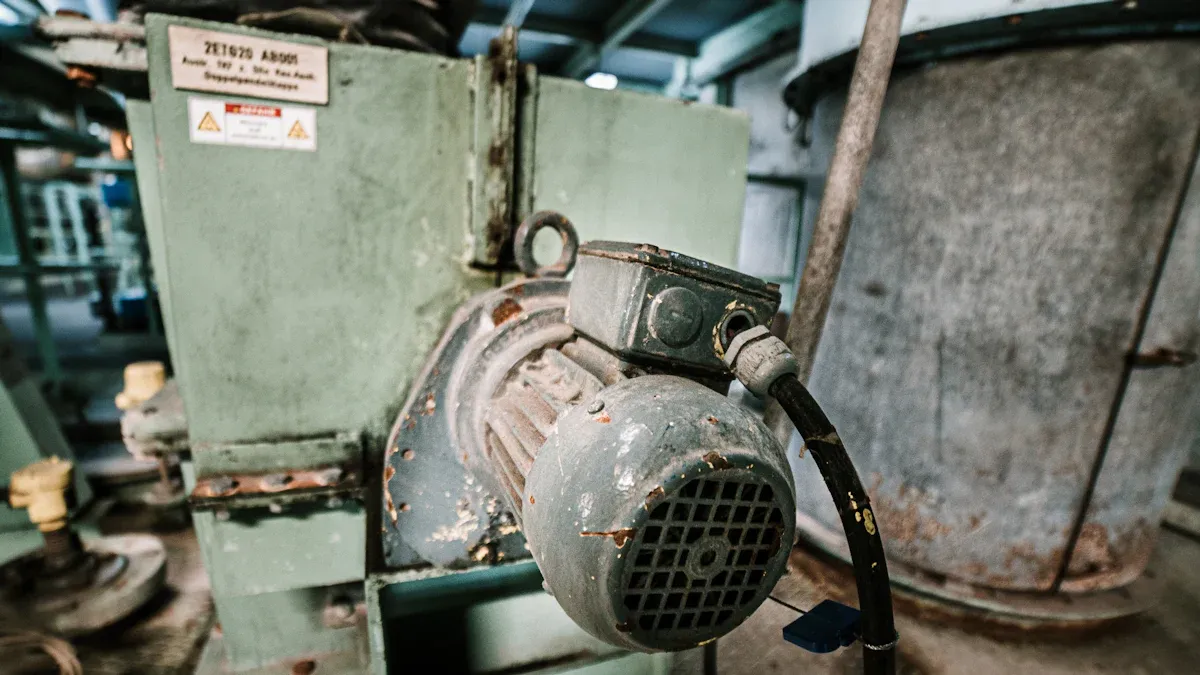
Three phase motors power the backbone of modern industry. You see them in factories, water treatment plants, and large commercial buildings. Their efficiency, high power, and reliability make them the top choice for heavy-duty equipment. The following table shows the most common application areas and their roles:
Application Area | Description |
|---|---|
Pumps and Water Treatment | Used in pumping systems for consistent fluid flow in wastewater treatment and municipal supply. |
Conveyor Systems | Essential for stable speed control and high torque in manufacturing and material handling. |
Compressors and Fans | Provide continuous operation for air compressors and HVAC systems with minimal maintenance. |
Industrial Machinery | Power various machinery like lathes and CNC equipment, ideal for heavy-duty operations. |
Cranes and Hoists | Supply necessary power for lifting heavy materials in construction and warehousing. |
Agricultural Equipment | Handle high loads in irrigation pumps and grain elevators, suitable for demanding environments. |
You find three phase motors in almost every type of industrial machinery. Their ability to deliver steady power and handle tough jobs sets them apart.
Conveyor systems rely on three phase motors for smooth and reliable movement of materials. You benefit from stable speed control and high torque, which are essential for manufacturing and material handling. These motors keep production lines running efficiently, even under heavy loads.
Lathes shape metal and wood with precision. You need a motor that can maintain constant speed and torque. Three phase motors provide this stability, making them perfect for lathes in machine shops and factories. They help you achieve accurate cuts and smooth finishes.
Grinding machines require consistent power to shape and finish materials. You use three phase motors here because they minimize vibration and deliver steady performance. This leads to better product quality and less downtime for maintenance.
Three phase motors drive many types of pumps and compressors. Their high efficiency and power density make them ideal for these demanding applications.
You see three phase motors in municipal water supply and wastewater treatment plants. They ensure a steady flow of water, even when demand changes. Their robust design allows them to run for long periods with minimal maintenance.
Air compressors in factories and workshops depend on three phase motors for reliable operation. These motors provide the high starting torque needed for heavy-duty compressors. You get smoother operation and lower energy costs compared to single-phase motors.
Tip: Three phase motors operate at 85-95% efficiency, while single-phase motors only reach 75-85%. This means you save energy and money over time.
Heating, ventilation, and air conditioning (HVAC) systems use three phase motors to move large volumes of air. You find them in commercial buildings, shopping malls, and hospitals. These motors deliver strong torque and continuous duty performance, which keeps air flowing efficiently.
Feature | Description |
|---|---|
Authentic OEM Replacement | Built for compatibility with Trane air handlers and commercial HVAC systems. |
Power | 1 Horsepower for strong torque and continuous duty performance. |
Voltage Range | Operates on 380 V to 415 V for versatility in commercial setups. |
Efficient Airflow | Rotational speeds around 1128/980 RPM for effective airflow. |
Heavy Duty Construction | Durable housing and quality bearings for long service life. |
You can also pair three phase motors with variable frequency drives (VFDs) to maintain high efficiency across different speeds. This combination helps you reduce energy use, especially when system demand changes.
You get lower energy losses and higher power factor, which means reduced electricity bills.
These motors handle fluctuating loads better, which is critical in industrial settings.
Maintenance is simpler, and service life is longer, so you spend less time and money on repairs.
Their robust design makes them ideal for demanding applications like pump drives, conveyors, and HVAC systems.
Three phase motors dominate industrial environments. You see them far more often than single-phase motors in large-scale applications. Their efficiency, reliability, and ability to handle heavy loads make them the preferred choice for powering the machines that keep industries moving.
You can choose from several main types of three phase motors, each designed for specific tasks in industry. Understanding these types helps you select the right motor for your equipment.
Induction motors are the most common type you will find in factories and workshops. They are also called asynchronous motors. You will see them in many machines because they are simple, reliable, and cost-effective.
Squirrel cage motors have a rotor shaped like a cage. You will notice these motors in conveyor belts, fans, and pumps. They require little maintenance and last a long time. Their design makes them tough and able to handle heavy loads. You can rely on them for steady performance in most industrial settings.
Wound rotor motors use windings on the rotor instead of a cage. You will find these motors in equipment that needs high starting torque, such as cranes and hoists. You can adjust their speed easily by changing the resistance in the rotor circuit. This feature gives you more control when starting or stopping large machines.
Note: Induction motors are usually simpler and less expensive than synchronous motors. You can save money on the initial purchase and maintenance.
Synchronous motors work differently from induction motors. The rotor in a synchronous motor turns at the same speed as the magnetic field in the stator. This means you get a constant speed, even if the load changes. You will see these motors in places where precise speed is important.
Synchronous motors are used in coal mining for large crushers.
You will find them in cement plants, where they power shredders.
Steel mills use them to drive conveyor belts in hot environments.
The sugar industry uses high-voltage synchronous motors for efficient processing.
Synchronous motors can also help improve the power factor in your facility. They often operate at high efficiency, sometimes over 95% in large sizes. This efficiency can lower your energy costs over time, even though the initial price is higher.
Motor Type | Key Features | Common Uses |
|---|---|---|
Squirrel Cage | Simple, durable, low maintenance | Fans, pumps, conveyors |
Wound Rotor | Adjustable speed, high starting torque | Cranes, hoists, heavy machinery |
Synchronous | Constant speed, high efficiency | Mining, cement, steel, sugar mills |
You can see that three phase motors come in different types to match your needs. Each type offers unique benefits for specific industrial applications.
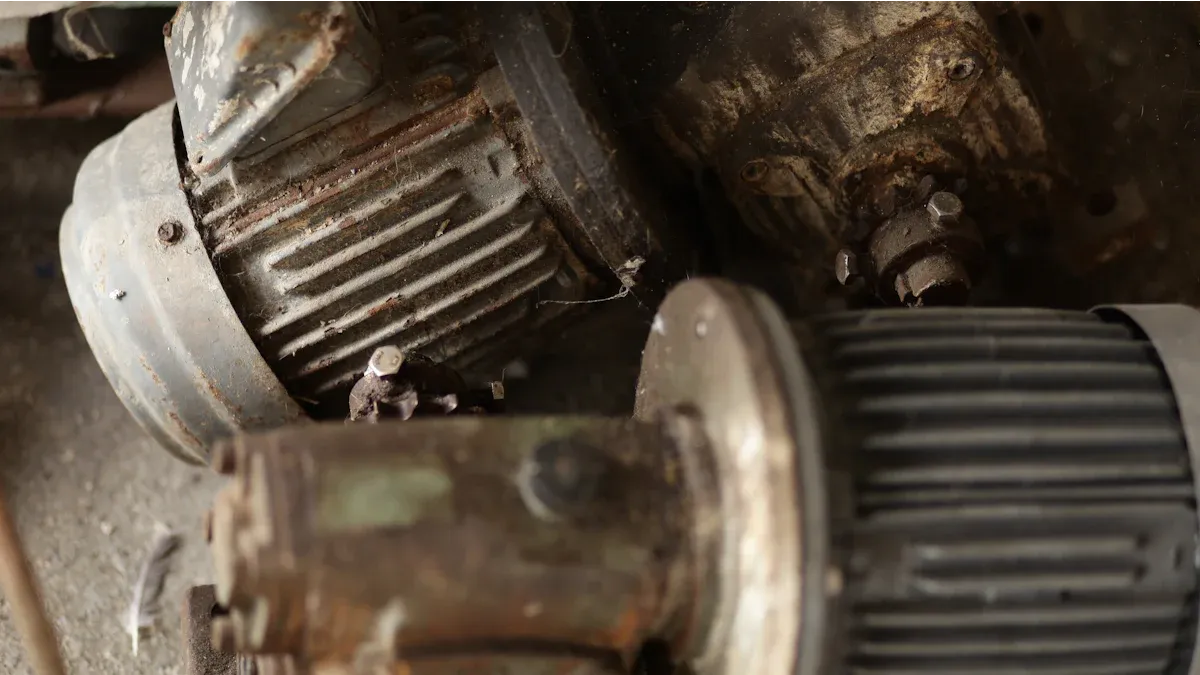
You see squirrel cage motors at work in many conveyor systems. These motors help move materials smoothly and continuously. You find them in factories, warehouses, and production lines. They keep boxes, parts, and products moving from one station to another. The steady speed of these motors ensures that materials flow evenly. This makes them perfect for automated processes where timing matters. You do not need to worry about sudden stops or jerky movements. The motors provide reliable motion, which helps you avoid delays and keep production on track.
Squirrel cage motors deliver smooth and continuous motion.
They support material transport in factories and warehouses.
Consistent speed ensures uniform flow in automated lines.
You rely on squirrel cage motors to power fans and blowers in many settings. These motors move air for ventilation and cooling. You find them in large buildings, workshops, and industrial plants. The stable speed of the motor keeps air flowing at a constant rate. This is important for keeping temperatures steady and air fresh. The simple design of the motor means fewer parts can break. You spend less time on maintenance and repairs. Modern squirrel cage motors also use energy efficiently, which helps you save on electricity costs.
Used for effective air movement in ventilation and cooling.
Stable speed provides consistent airflow.
Simple design leads to high reliability and low maintenance.
Energy efficiency meets modern standards.
Self-starting ability removes the need for extra starting devices.
Strong construction handles tough environments.
Good torque at startup helps with heavy loads.
Tip: Squirrel cage motors maintain a constant speed even when the load changes. This makes them a smart choice for fans and blowers that run all day.
You find squirrel cage motors in many types of industrial equipment. Machine tools like lathes, drilling machines, and milling machines often use these motors. They also power agricultural and industrial machines such as grain mills, crushers, and mixers. The motors provide steady power and can handle tough jobs. You benefit from their long service life and low maintenance needs. When you need a motor that works hard and lasts, squirrel cage motors are a reliable option.
Common in machine tools: lathes, drills, and mills.
Used in agricultural machines: grain mills, crushers, mixers.
You see that three phase motors, especially squirrel cage types, play a key role in keeping many industries running smoothly. Their reliability, efficiency, and simple design make them a top choice for a wide range of applications.
You depend on wound rotor motors when you need to lift and move heavy loads with precision. These motors give you high starting torque, which is essential for raising large objects safely. You can control the speed and movement of the crane or hoist by adjusting the resistance in the rotor circuit. This feature helps you start and stop loads smoothly, reducing the risk of swinging or dropping. You also benefit from lower starting current, which protects your electrical system from sudden surges.
High starting torque lets you lift heavy loads with ease.
Reduced starting current minimizes electrical stress.
Adjustable rotor resistance gives you precise speed control.
Smooth acceleration and deceleration prevent load swing.
Controlled electrical braking increases safety during lowering.
You see wound rotor motors in gantry cranes, overhead cranes, and hoists in factories and shipping yards. Their robust design ensures reliable operation, even in tough environments.
You use wound rotor motors in heavy machinery that requires both power and flexibility. These motors allow you to adjust speed and torque to match the demands of the job. You find them in equipment like chippers, conveyors, and large fans. By changing the external resistance, you can fine-tune the motor’s performance for different tasks. This makes wound rotor motors ideal for machines that handle varying loads throughout the day.
Speed control helps you match the motor to the task.
High torque at startup moves heavy machinery without delay.
Durability ensures long-term use in demanding conditions.
You often see these motors in hoists, elevators, and conveyor systems. Gantry cranes and overhead cranes rely on wound rotor motors for smooth and safe handling of heavy containers. You can trust these motors to deliver consistent performance, even when the workload changes.
You rely on wound rotor motors in mining because they handle heavy loads and harsh conditions. These motors provide the high starting torque needed to power large pumps and extraction machines. You can control the speed, which is important for operating equipment safely and efficiently. The ability to adjust performance helps you manage the tough demands of mining operations.
Wound rotor motors stand out in mining for their strength and reliability. You can keep your equipment running smoothly, even when the environment is challenging. When you need a motor that combines power, control, and durability, wound rotor motors are a smart choice.
You see that three phase motors, especially wound rotor types, play a vital role in industries where heavy lifting, speed control, and reliability matter most.
You depend on synchronous motors when you need exact speed and stable performance. These motors help you achieve high precision in many advanced machines. You see them in places where accuracy matters most. Synchronous motors keep the speed constant, even if the load changes. This feature makes them perfect for tasks that require careful control.
Synchronous motors generate electricity efficiently and stably in power plants. You rely on them to keep the grid running smoothly.
In the marine industry, you use synchronous motors to power ship propulsion systems. These motors help ships navigate efficiently and safely.
Industrial settings use synchronous motors in high-performance machinery like compressors and centrifugal pumps. You benefit from precise speed regulation, which improves the quality of your work.
You find synchronous motors in low-power applications such as positioning machines and robot actuators. These machines need high precision to operate correctly.
You notice that synchronous motors support many industries. Their ability to maintain exact speed helps you produce consistent results. When you need reliable performance, you choose synchronous motors for your high-precision equipment.
You use synchronous motors to improve power factor in your facility. These motors provide a leading power factor, which offsets the lagging power factor from induction motors. You can adjust the direct field current to reach the desired power factor. This flexibility gives you more control over your electrical system. Induction motors cannot offer this level of adjustment because their power factor depends on the load.
Synchronous motors help you reduce energy losses and lower electricity bills. You keep your equipment running efficiently. When you install synchronous motors, you make your power system more stable. You also protect your machines from voltage drops and surges. Many factories and large buildings rely on synchronous motors for power factor correction. You see better performance and fewer interruptions in your operations.
Tip: You can combine synchronous motors with other three phase motors to balance your power system and boost efficiency.
You see that synchronous motors play a key role in both high-precision machinery and power factor correction. Their unique features help you achieve stable, efficient, and reliable operation in many industrial settings.
You want your machines to run efficiently and deliver strong performance. Three phase motors help you achieve both goals. These motors convert more electrical energy into useful work, which means less waste and more output. You can see their efficiency in the numbers:
Three phase motors operate at 85-95% efficiency. Single-phase motors only reach 75-85%.
The design of three phase motors reduces electrical losses, so you get more power for every dollar spent on electricity.
These motors perform well even when the load changes, which is important for factories and workshops with varying demands.
They have a higher power factor, so you use less energy and lower your electricity bills.
You can use three phase motors in many applications because they offer a wide range of power outputs. The table below shows how much power you can expect for different machines:
Application | Motor Power Range (kW) |
|---|---|
Pumps | 5 - 500 |
Conveyors | 1 - 250 |
Fans and Blowers | 0.5 - 300 |
Crushers | 30 - 600 |
Mixers | 1 - 150 |
You can rely on these motors for both small and large jobs. They work well in low-power tasks and heavy-duty equipment.
You want to save money while keeping your operations running smoothly. Three phase motors help you do that in several ways. Their high efficiency means you spend less on electricity over time. You also benefit from lower maintenance costs because these motors are built to last.
IE2 three phase motors use less power, which leads to lower utility bills.
Their durability means you do not need to replace them as often, reducing long-term expenses.
Upgrading to energy-efficient motors is a smart financial move. You cut costs and reduce downtime, which keeps your business productive.
You make a wise investment when you choose three phase motors for your facility.
You need equipment that works when you need it. Three phase motors give you that peace of mind. They often last 20-30 years with proper care, outlasting single-phase motors by about 50%. Their robust design helps them handle heat, overloads, and tough conditions.
Brushless technology and IP55 protection reduce failures by 30% in industrial settings.
Advances in AI-driven fault diagnosis and IoT monitoring help you predict maintenance needs. You can fix problems before they cause downtime.
These motors keep your machines running smoothly, so you avoid unexpected stops.
You can trust three phase motors to deliver reliable service year after year. Their strong performance, cost savings, and long life make them the preferred choice for industrial and commercial use.
You gain efficiency, reliability, and cost savings when you choose three phase motors for your equipment. Many industries benefit from these motors, including manufacturing, oil and gas, water treatment, HVAC, construction, and agriculture.
Industry | Benefits of Three-Phase Motors |
|---|---|
Manufacturing | Efficiency, reliability, and cost-effectiveness |
Oil and Gas | Unmatched advantages in low-power applications |
Water Treatment | Energy efficiency and smooth operation |
HVAC | Compact design and economic benefits |
Construction | Reliable solutions for various applications |
Agriculture | Enhanced performance in operational tasks |
You see lower energy bills, minimal maintenance, and high resale value. Three phase motors can be up to 30% more efficient than single-phase motors. This efficiency supports sustainability and reduces operational costs. When you need dependable power for high-demand or large-scale applications, these motors deliver the results you expect.
You get more power and smoother operation from three-phase motors. They use three electrical currents, while single-phase motors use one. This design gives you higher efficiency and better performance for heavy-duty equipment.
You usually cannot use a three-phase motor at home. Most homes have single-phase power. Three-phase motors need a special power supply, which you find in factories or large buildings.
You use a device called a Variable Frequency Drive (VFD). This device lets you change the motor’s speed by adjusting the frequency of the electricity. You get precise control for different tasks.
You pay more upfront for a three-phase motor. Over time, you save money because these motors last longer and use less energy. You also spend less on repairs and maintenance.
You should check bearings, clean dust, and inspect wiring. Lubricate moving parts as needed. Regular checks help you prevent breakdowns and keep your motor running smoothly.
Factories choose three-phase motors for their reliability, high power, and efficiency. You can run large machines without frequent stops. These motors handle tough jobs and last many years.
Yes, you can. Swap any two of the three power wires. This change reverses the motor’s rotation. You do not need extra parts or tools.
You may hear strange noises, feel vibrations, or notice overheating. The motor may lose power or trip circuit breakers. If you see these signs, check the motor right away.


