- All
- Product Name
- Product Keyword
- Product Model
- Product Summary
- Product Description
- Multi Field Search


Views: 0 Author: Site Editor Publish Time: 2026-04-27 Origin: Site


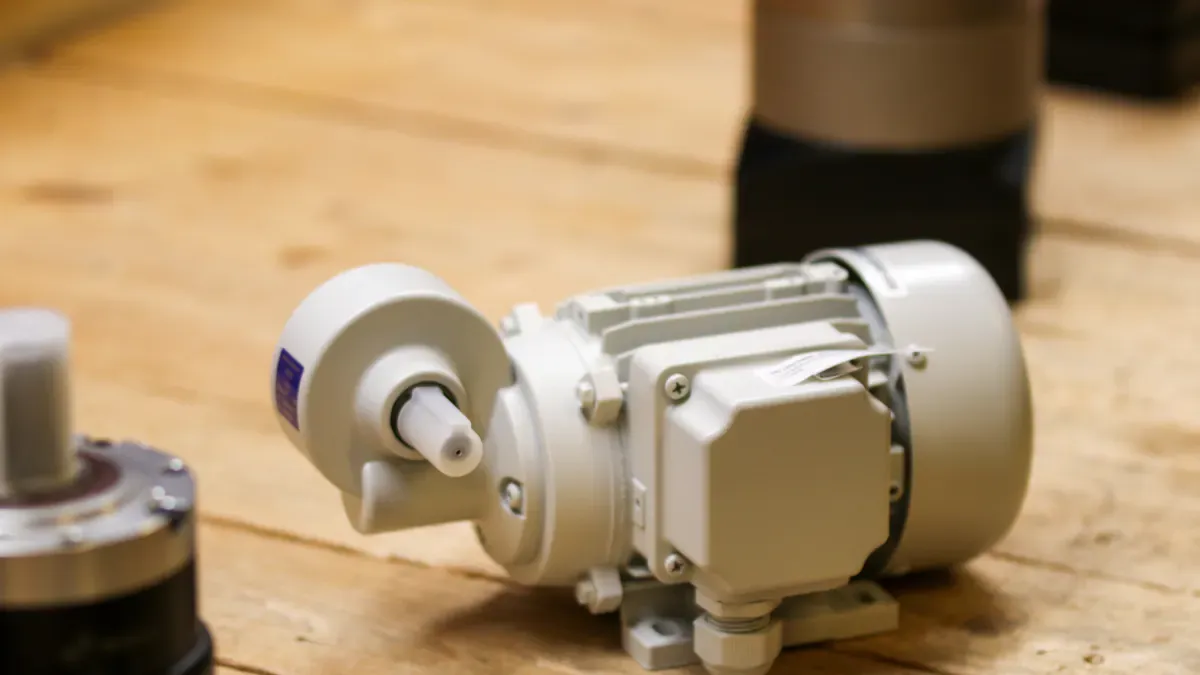
You might wonder if three phase motors have a capacitor. The answer is simple: they do not need one for starting or running. Many people ask this because single phase motors often use a capacitor to help them start. If you have worked with both types, you may notice this key difference right away.
Three phase motors do not require capacitors for starting or running. Their design allows them to operate independently.
The balanced three-phase system provides consistent torque, eliminating the need for additional components like capacitors.
Three phase motors are self-starting due to their rotating magnetic field, which simplifies their operation and maintenance.
Using capacitors can improve power factor in three phase systems, leading to better efficiency and lower energy costs.
Capacitors may be used in specific applications, such as phase conversion or power factor correction, but are not needed for standard operation.
Understanding the differences between single phase and three phase motors helps avoid misconceptions about capacitor use.
Regular maintenance of capacitor systems is essential to ensure reliability and prevent failures.
Always consult a professional before adding capacitors to a three phase motor system to avoid potential risks.
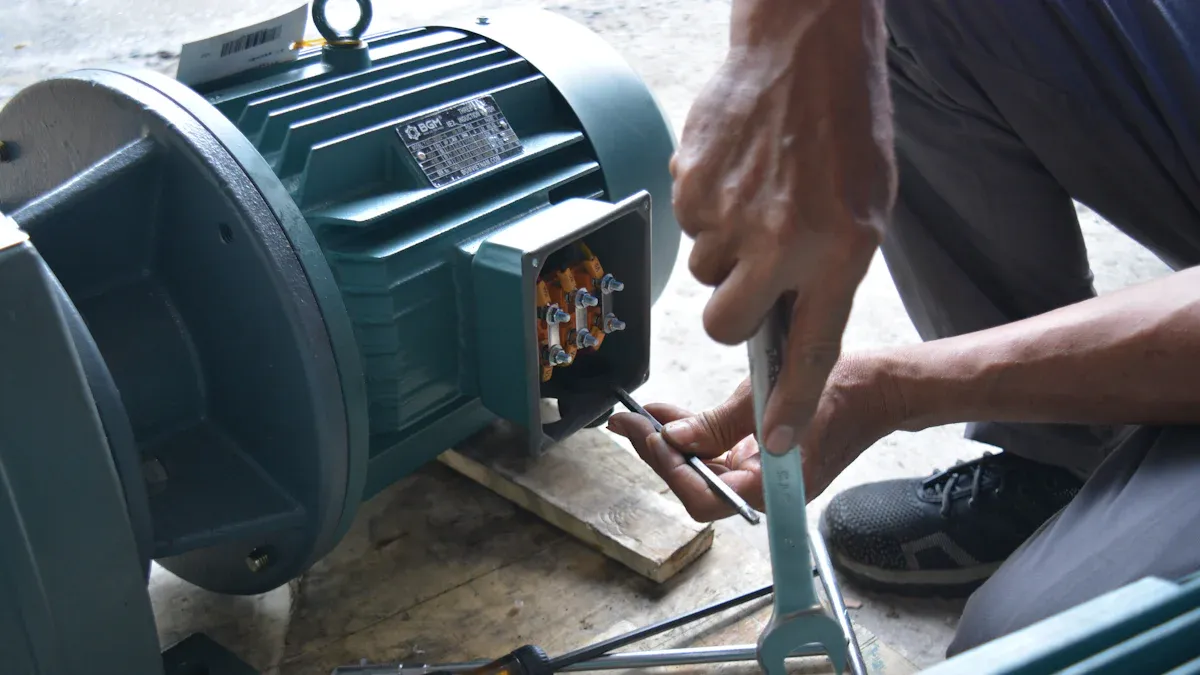
You do not need a 3 phase motor capacitor for starting or running three phase motors. These motors operate without a capacitor because their design uses three alternating currents spaced 120 degrees apart. This setup creates a balanced system that delivers steady mechanical torque. You benefit from a self-starting motor that does not rely on extra components. The three-phase motor achieves phase displacement naturally, so you avoid the need for a 3 phase motor capacitor. The absence of a capacitor makes the motor simpler and more reliable. You also see higher efficiency in three phase motors, which reduces maintenance and improves performance.
Here are the main reasons why a 3 phase motor capacitor is not required:
The three-phase system uses balanced phases, so you get consistent torque without needing a capacitor.
Three phase motors start and run on their own, making a 3 phase motor capacitor unnecessary.
The design delivers power efficiently, so you do not need a capacitor for phase correction.
You enjoy a simpler motor design, which lowers maintenance and increases reliability.
You might wonder about the need for a 3 phase motor capacitor because single phase motors often require a capacitor to start. If you have experience with single phase motors, you know they use a capacitor to create a phase shift. This shift helps the motor start by generating a rotating magnetic field. Three phase motors do not need this extra help. Their internal design uses three alternating currents spaced evenly in time. This arrangement creates a smooth and constant power flow, so the motor starts by itself. You do not need a 3 phase motor capacitor for this process.
Many people confuse the two types of motors because single phase motors rely on a capacitor for operation. You may see a capacitor attached to a single phase motor and assume that three phase motors need one too. In reality, the three-phase motor uses its power supply to create the rotating magnetic field. You avoid the need for a 3 phase motor capacitor, which makes the motor more efficient and easier to maintain.
Tip: If you work with three phase motors, you do not need to worry about installing a 3 phase motor capacitor for starting or running. The motor's design handles everything for you.
You see a unique feature in three phase motors. The three-phase supply creates a rotating magnetic field inside the stator. This field comes from three alternating currents spaced 120 degrees apart. The rotating magnetic field induces currents in the rotor. The rotor follows the magnetic field and starts turning right away. You do not need a capacitor to help the motor start. The design ensures that the motor begins running as soon as you apply power.
Note: The rotating magnetic field gives three phase motors a natural advantage. You avoid extra starting components, which makes the motor more reliable and easier to maintain.
You benefit from a self-starting design when you use three phase motors. The motor starts on its own because the rotating magnetic field pulls the rotor into motion. You do not have to add a capacitor or any other device to get the motor moving. This self-starting feature saves you time and reduces the risk of mechanical failure. The motor operates smoothly and delivers steady torque from the moment you turn it on.
You avoid the need for extra wiring.
You reduce maintenance tasks.
You enjoy consistent performance.
You notice a big difference when you compare three phase motors to single phase motors. Single phase motors cannot start on their own. They need a capacitor or other starting mechanism to create a phase shift. This shift produces a rotating magnetic field, which helps the motor begin turning. Three phase motors do not have this problem. Their supply creates a rotating magnetic field naturally.
Here is a simple table that shows the differences:
Feature | Single Phase Motors | Three Phase Motors |
|---|---|---|
Starting Mechanism | Requires additional starting mechanisms (e.g., capacitor-start, capacitor-run) | Self-starting due to a continuously rotating magnetic field created by the three-phase supply |
Magnetic Field | Produces a pulsating magnetic field that cannot initiate rotation on its own | Creates a rotating magnetic field that induces currents in the rotor, driving it to follow the field |
Complexity of Design | More complex due to the need for auxiliary components | Simpler design as it does not require additional starting components |
You see that three phase motors offer a simpler and more efficient solution. You do not need a capacitor for starting or running. The motor’s design gives you reliable performance and easy maintenance.
You sometimes see capacitors used with three phase motors to improve power factor. Power factor measures how efficiently your motor uses electricity. If your motor draws more reactive power, your energy bill increases. You can install a capacitor to store and release energy, which offsets reactive power and helps your motor use electricity more efficiently.
You often connect power factor correction capacitors in two ways:
Delta connection balances the reactive load across all three phases. This setup works well for motors and balanced loads.
Wye (star) connection uses lower voltage-rated capacitors. You may choose this method for phase balancing.
You benefit from better efficiency and lower energy costs when you use the right capacitor configuration. Many factories and workshops add these capacitors to their three phase motor installations to reduce wastage and avoid penalties from utility companies.
Tip: Improving power factor with capacitors can help you save money and protect your equipment from unnecessary strain.
You may need to use capacitors when you want to run a three phase motor from a single phase power supply. This situation often happens in homes or small shops where only single phase power is available. You can use phase converters to solve this problem.
Static phase converters use capacitors to create a third phase for starting the motor. You connect the converter to your single phase supply. The capacitor generates a phase shift, which helps the motor start. After the motor starts, the converter disconnects, and the motor runs on two phases. You get a simple solution, but the motor may not reach full power.
Easy to install
Lower cost
Limited performance for heavy loads
Rotary phase converters use a combination of capacitors and a rotary transformer (idler motor) to produce a continuous three phase supply. You connect your single phase power to the converter. The rotary converter uses capacitors to balance the phases and keep the voltage steady. Your motor runs more smoothly and can reach its full rated power.
Converter Type | Uses Capacitors | Performance | Typical Application |
|---|---|---|---|
Static Converter | Yes | Moderate | Light-duty motors |
Rotary Converter | Yes | High | Heavy-duty equipment |
Note: If you need reliable performance for demanding tasks, rotary phase converters offer better results than static converters.
You see that capacitors play a key role in both power factor correction and phase conversion. You can improve efficiency, save money, and run three phase motors even when only single phase power is available.
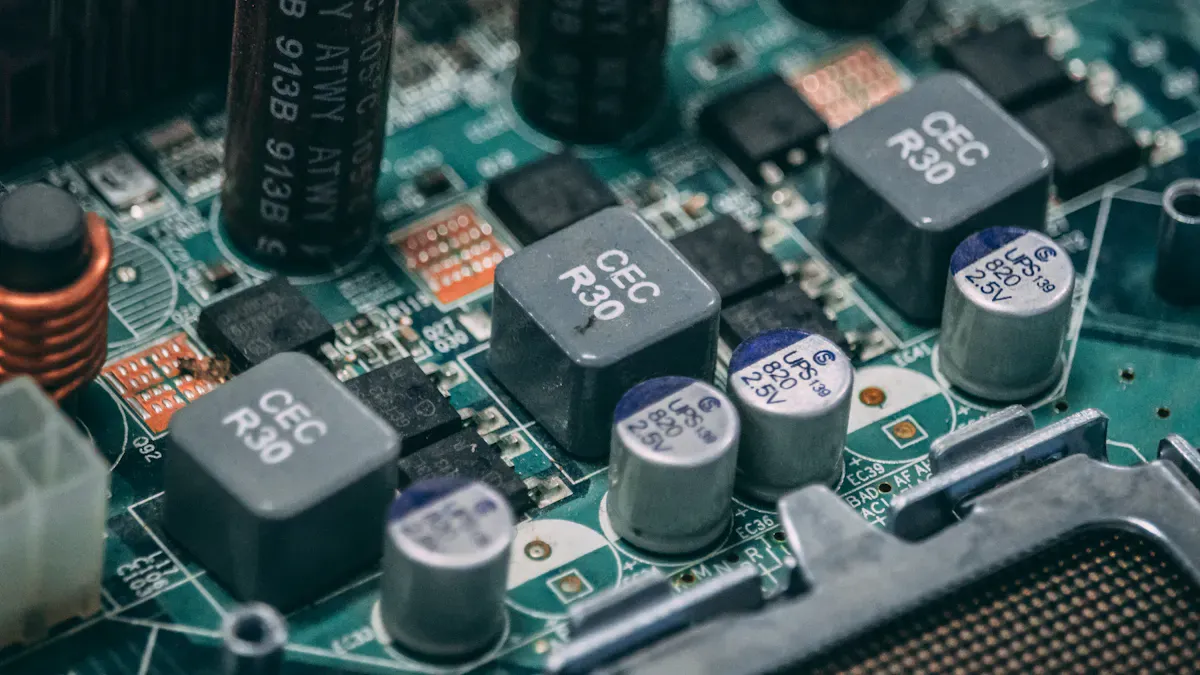
You can boost the efficiency of your three phase motor system by installing a capacitor for power factor correction. When you add a capacitor, it injects leading reactive power into your electrical system. This action cancels out the lagging reactive power produced by inductive loads, such as electric motors. As a result, you reduce the phase angle between voltage and current. This means less wasted energy and a more efficient operation.
You notice several benefits when you improve power factor:
Lower current drawn from the power supply
Increased system capacity
Enhanced voltage stability
Compliance with utility regulations
Tip: If you see frequent power factor measurements below 0.90, you should consider adding a capacitor bank. This simple upgrade helps you meet industry standards and avoid penalties.
Industry standards recommend a target power factor between 0.95 and 0.98 lag. Capacitors supply reactive power locally, offsetting the inductive effects of motors. Properly sized capacitors help align current and voltage waveforms, which reduces losses and improves efficiency.
Aspect | Details |
|---|---|
Target Power Factor | 0.95 to 0.98 lag |
Role of Capacitors | Supply reactive power locally to offset inductive loads |
Benefits | Reduces current draw, improves efficiency |
You see that three phase motors already operate at high efficiency, usually between 85% and 96%. In comparison, single-phase motors only reach 50% to 70% efficiency. This difference means you save energy and money when you use three phase motors and power factor correction.
You can achieve substantial savings on your energy bills by correcting power factor with capacitors. When you reduce overall energy consumption, you avoid extra charges and penalties for low power factor. This is especially important in industries with high energy demand.
Here are some ways power factor correction affects your costs:
Reduces wasted energy
Lowers monthly bills
Avoids power factor penalties from utility companies
Increases system capacity without upgrading equipment
Note: Businesses that run electric motors extensively benefit the most from power factor correction. You can see significant cost reductions and improved performance.
If you operate a facility with many electric motors, you should monitor your power factor regularly. Installing capacitors helps you meet utility standards and keeps your energy costs under control. You also protect your equipment from unnecessary strain and extend its lifespan.
You gain a more efficient system, lower operational costs, and better compliance with regulations. Power factor correction is a smart investment for anyone who wants to optimize their three phase motor setup.
You gain several advantages when you add capacitors to three phase motor circuits, especially for power factor correction. Capacitors help your system run more efficiently by reducing the total current drawn from the supply. This improvement lowers heat generation, which leads to reduced operational costs and extends the life of your equipment. You also see stabilized voltage levels, which enhance the performance of connected devices. Capacitors supply reactive power locally, so inductive loads like motors, compressors, and pumps operate more smoothly. If you need high starting torque, capacitors can help motors achieve better performance during startup.
Improved efficiency by lowering current draw
Reduced heat, which cuts operational costs and extends equipment life
Stabilized voltage levels for better equipment performance
Enhanced operation of inductive loads by supplying reactive power locally
Tip: Adding capacitors can make your motor system more reliable and cost-effective.
You must pay attention to the risks when you use capacitors with three phase motors. Incorrect application can cause several problems. If you select the wrong voltage rating, you risk premature failure. Studies show that 87% of capacitor failures come from mismatched voltage ratings, so always follow manufacturer guidelines. Using the wrong run capacitor value can lead to excessive current draw and overheating if the value is too high, which may damage motor windings. If the value is too low, you get reduced starting torque and lower efficiency, also causing overheating.
Mismatched voltage ratings cause premature failure
Excessive current draw and overheating if capacitor value is too high
Reduced starting torque and efficiency if value is too low
Premature or catastrophic failure if voltage rating is too low
You also face risks from over-correction. Too much reactive power compensation can lead to self-excitation and overvoltage when the motor switches off. Oversized capacitors may create resonance below system frequency, causing overvoltage at motor terminals. Resonance can result in insulation failure or flashover at the motor or capacitor.
Note: Always size capacitors correctly and monitor your system to avoid these issues.
You keep your capacitor system reliable by following regular maintenance practices. Clean enclosures and components with a dry cloth or vacuum to remove dust. Tighten terminals and busbar connections to prevent resistance and heat buildup. Check ventilation systems by cleaning filters and testing fans. Control humidity and keep it below 70% to avoid condensation. Inspect fuse integrity, discharge resistors, and earthing systems for safety.
Clean enclosures and components regularly
Tighten terminals and busbar connections
Check and maintain ventilation systems
Control humidity to prevent condensation
Inspect safety features like fuses and earthing
You should measure capacitance to ensure it stays within ±5% of rated specifications. Test insulation resistance to detect moisture or breakdown. Monitor voltage and current balancing to prevent stress on your system. Use infrared thermography to spot hot spots during inspections. Make sure cooling and airflow around capacitor enclosures are adequate. Install temperature sensors for continuous monitoring.
Callout: Many failures show visual signs first. Spend 10-15 minutes on a thorough visual inspection to catch issues early. Look for bulging capacitors, oil leaks, burnt windings, or moisture damage.
You protect your equipment and improve performance by following these maintenance steps.
You may hear many myths about three phase motors and capacitors. These misunderstandings can lead to mistakes in installation and troubleshooting. Many people believe that all electric motors need capacitors. This is not true for three phase motors. You do not need a starting or running capacitor for most three phase motor applications.
Here is a table that shows some common misconceptions and the facts behind them:
Misconception | Explanation |
|---|---|
Starting capacitors provide torque | They add capacitive resistance, which changes the timing between start and run windings. This creates a rotating magnetic field in single phase motors, not in three phase motors. |
Start capacitors can boost voltage | They only hold a charge. If you charge them with 120V, they will only release 120V. |
Start capacitors accumulate charge for a boost | They release their charge to help a motor start, but they do not increase voltage beyond their charge. |
You might see a capacitor on a single phase motor and think three phase motors need one too. This is a common mistake. Three phase motors create a rotating magnetic field by design. You do not need a capacitor to start or run them. If you add a capacitor where it is not needed, you may cause problems or even damage the motor.
Tip: Always check the motor type before adding or replacing a capacitor. Three phase motors usually do not need them for starting or running.
You may still find capacitors in three phase motor systems, but they serve different purposes. They often help with power factor correction or phase conversion. You can identify these uses by looking for certain equipment and performing simple tests.
Here are some ways you can spot capacitor use in three phase motor installations:
Look for power factor controllers. These devices monitor and adjust reactive power to keep your system efficient.
Check for power factor correction panels. These panels include devices that improve power factor and regulate reactive power.
Find power factor capacitors. These store and release energy to offset reactive power, making your current draw from the grid more efficient.
Notice active power factor correction systems. These systems make real-time adjustments for changing loads.
You can also use visual and electrical tests to confirm the presence of capacitors:
Perform a visual inspection. Look for physical signs of capacitor failure, such as bulging or leaking.
Use electrical tests. Measure the phase angle or perform insulation resistance tests to check for capacitor function.
Always turn off and lock out power before testing. Wait at least five minutes for capacitors to discharge.
Use a resistor to short each terminal to ground. Test voltage across each terminal with a rated meter.
Disconnect and isolate all power from the motor before testing. Perform an insulation resistance test for safety.
Note: Proper identification helps you avoid mistakes and keeps your motor system safe and efficient.
You can avoid confusion by understanding the real role of capacitors in three phase motor systems. When you know what to look for, you make better decisions and keep your equipment running smoothly.
You do not need a capacitor to start or run a three phase motor. You may add capacitors for power factor correction or phase conversion. Before you make changes, review your system’s needs and risks. The table below shows common starting methods and what you should consider:
Starting Method | Advantages/Considerations | Risks/Trade-offs |
|---|---|---|
Full Voltage | Maximum starting torque | High inrush current |
Reduced Voltage | Less stress on load | May not start heavy loads |
Soft Starter | Smooth start, less mechanical stress | Not for every application |
Adjustable Speed Drive | Flexible speed and starting | Higher initial cost |
Power Factor Correction Capacitors | Lower current, better efficiency | Incorrect sizing can cause damage |
Tip: Always talk to a qualified professional before adding capacitors to your three phase motor system.
You do not need a capacitor to start a three phase motor. The motor uses a rotating magnetic field from the power supply. This design allows the motor to start on its own.
You can use capacitors for power factor correction. This improves efficiency and reduces energy costs. The capacitor offsets reactive power and helps your system use electricity more effectively.
Single phase motors need capacitors to create a phase shift for starting. Three phase motors generate a rotating magnetic field naturally. You do not need extra components for starting or running.
You may use capacitors for power factor correction or phase conversion. These applications help improve efficiency or allow three phase motors to run on single phase power.
You can check for power factor correction panels or phase converters near your motor. Look for capacitor banks or controllers. If you see these, your system uses capacitors for efficiency or conversion.
You risk overheating, reduced efficiency, or equipment failure. Always follow manufacturer guidelines and size capacitors correctly. Incorrect application can damage your motor or electrical system.
You can use a phase converter with capacitors to run a three phase motor on single phase power. Static and rotary converters both use capacitors to create the needed phase shift.
You do not need capacitors to increase starting torque in three phase motors. The motor’s design provides high starting torque without extra components.


