- All
- Product Name
- Product Keyword
- Product Model
- Product Summary
- Product Description
- Multi Field Search


Views: 0 Author: Site Editor Publish Time: 2026-01-27 Origin: Site


Electric motors are vital in our daily lives. They power everything from household appliances to industrial machines. In this article, we'll explore the differences between three-phase motors and single-phase motors. Understanding these distinctions is crucial for choosing the right motor for your needs, whether at home or in industry. You’ll learn about their unique features, advantages, and applications.
An electric motor is a device that converts electrical energy into mechanical energy. It does this by utilizing electromagnetic principles. When an electric current flows through coils of wire, it generates a magnetic field. This magnetic field interacts with the rotor, causing it to spin and produce mechanical power.
Electric motors are essential in various applications, from household appliances to industrial machinery. They can be found in fans, washing machines, and even electric vehicles. Understanding how these motors work helps us appreciate their role in our daily lives.
Electric motors come in various types, each designed for specific applications. The two main categories are AC (Alternating Current) and DC (Direct Current) motors. In this section, we will focus on AC motors, particularly single-phase and three-phase motors.
Motor Type | Description | Common Applications |
DC Motors | Use direct current; ideal for precise speed control. | Toys, electric vehicles, robotics. |
AC Motors | Use alternating current; more common in industrial settings. | Fans, compressors, industrial machines. |
Single-Phase Motors are typically used in residential settings. They operate on a single-phase power supply, which can limit their efficiency. These motors often require additional components, such as capacitors, to start. Common types include capacitor-start motors and shaded-pole motors.
On the other hand, Three-Phase Motors are designed for industrial applications. They operate on a three-phase power supply, providing a smooth and continuous power flow. This design enhances efficiency and performance. Three-phase motors are self-starting and can handle larger loads, making them ideal for heavy machinery.
In summary, understanding these types of electric motors is crucial for selecting the right motor for specific needs. Whether you need a simple motor for a home appliance or a robust motor for industrial use, knowing the differences helps you make informed decisions.
Three-phase motors are a type of AC motor that operates using three alternating currents, each phase offset by 120 degrees. This design creates a rotating magnetic field, which is essential for efficient motor operation. When power flows through the motor's windings, it generates a magnetic field that interacts with the rotor, causing it to turn.
Key characteristics of three-phase motors include:
● Self-Starting Capability: Unlike single-phase motors, three-phase motors can start without needing additional components. The rotating magnetic field initiates motion immediately.
● High Efficiency: These motors are more efficient than their single-phase counterparts, converting electrical energy into mechanical energy with minimal losses.
● Torque: They provide higher torque at startup and during operation, making them suitable for heavy loads.
Three-phase motors offer several advantages that make them ideal for various applications:
1. Higher Efficiency and Performance: They generally operate at higher efficiency levels, translating into lower energy costs and better performance.
2. Consistent Power Delivery: The three-phase system ensures a smooth and continuous power supply, reducing vibrations and improving operational stability.
3. Compact Size: For the same power output, three-phase motors are often smaller and lighter than single-phase motors. This compactness allows for easier installation in tight spaces.
4. Lower Operating Costs: Over time, their efficiency leads to reduced electricity bills and maintenance costs, making them a cost-effective choice.
5. Reliability: These motors can handle dense mechanical loads commonly found in industrial settings, ensuring they perform consistently under demanding conditions.
Three-phase motors are widely used in industrial settings due to their robustness and efficiency. Here are some common applications:
● Manufacturing: They power conveyor systems, assembly lines, and robotic arms, playing a crucial role in production processes.
● Heavy Machinery: Equipment such as pumps, compressors, and fans often rely on three-phase motors for reliable operation.
Equipment Type | Description |
Conveyors | Move materials efficiently along production lines. |
Pumps | Used in water treatment, oil, and chemical processing. |
Compressors | Essential for refrigeration and air conditioning systems. |
Three-phase motors can be configured in two main ways: star (Y) and delta (Δ) connections.
● Star Connection: Each winding is connected to a common point, providing higher voltage and lower current. This setup is often used for starting the motor.
● Delta Connection: Windings are connected in a loop, allowing for higher current and torque at full load. This configuration is typically used during normal operation.
These configurations enhance the versatility of three-phase motors, allowing them to adapt to different operational requirements.
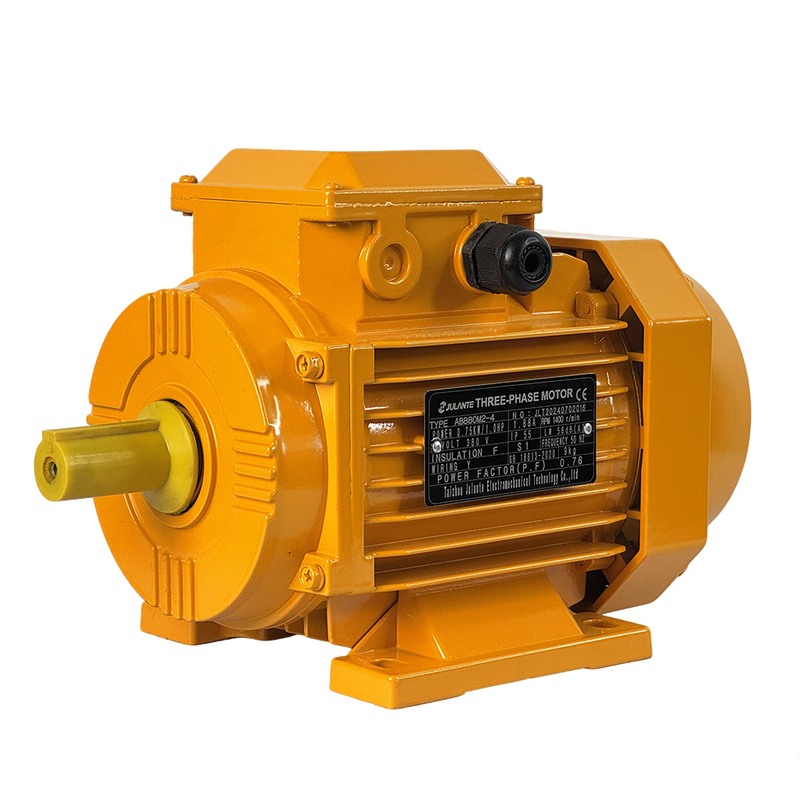
Single-phase motors are a type of electric motor designed to operate on a single-phase power supply. They are commonly used in residential and light commercial applications. When powered, these motors rely on an alternating current that flows through one phase, creating a magnetic field that causes the rotor to turn.
Key characteristics of single-phase motors include:
● Reliance on Auxiliary Starting Mechanisms: Unlike three-phase motors, single-phase motors often require additional components, such as capacitors or starting relays, to initiate operation. This makes their design slightly more complex.
● Lower Efficiency: Single-phase motors typically operate at lower efficiency levels compared to three-phase motors. This results in higher energy consumption for the same output.
Single-phase motors have several advantages that make them suitable for specific applications:
1. Simplicity in Design and Installation: Their straightforward design allows for easier installation and maintenance. This is particularly beneficial for homeowners and small businesses.
2. Cost-Effectiveness for Low-Power Applications: These motors are generally less expensive than three-phase motors, making them ideal for low-power needs. They are often the go-to choice for small appliances and tools.
3. Common Household Applications: Single-phase motors are found in various household devices, including fans, washing machines, and small pumps. They provide reliable performance for everyday tasks.
Motor Type | Description |
Capacitor-Start | Uses a capacitor to provide an initial boost for starting. Ideal for applications requiring high starting torque. |
Split-Phase | Utilizes two windings to create a phase shift, allowing for starting. Common in small appliances. |
While single-phase motors have their advantages, they also come with limitations:
● Challenges with Starting Torque and Efficiency: These motors often struggle to generate enough starting torque, making them less suitable for heavy loads. This can lead to inefficient operation in demanding applications.
● Inability to Handle Heavy Loads: Compared to three-phase motors, single-phase motors are less capable of managing larger mechanical loads. This limits their use in industrial settings.
● Higher Mechanical Noise and Vibrations: Single-phase motors tend to produce more noise and vibrations during operation. This can be a concern in quiet environments where noise levels matter.
● Reliability of Power Supply: Single-phase power supply can be less stable than three-phase systems, leading to potential operational issues in certain situations.
Single-phase motors serve crucial roles in everyday applications, but understanding their limitations helps in choosing the right motor for specific needs.
When comparing power supply requirements, three-phase motors require a three-phase power source, while single-phase motors operate on a single-phase supply. This fundamental difference impacts their efficiency levels significantly. Three-phase motors are typically more efficient, converting electrical energy into mechanical energy with minimal losses.
In terms of energy consumption, three-phase motors experience lower copper losses due to their design, which distributes electrical current more evenly across the windings. On the other hand, single-phase motors often face higher copper losses, leading to increased energy costs over time.
Three-phase motors are known for their self-starting capabilities. They can initiate operation without needing additional components, thanks to the rotating magnetic field created by the three-phase power supply. This feature simplifies their design and operation.
In contrast, single-phase motors require auxiliary starting mechanisms, such as capacitors or relays, to begin operation. These components add complexity to the motor's design and can lead to potential points of failure. The reliance on these starting mechanisms impacts overall operational efficiency, making single-phase motors less straightforward to manage.
Torque is a critical factor in motor performance. Three-phase motors provide higher starting torque compared to single-phase motors, making them suitable for applications that require heavy lifting or high initial loads. This enhanced torque translates into better operational efficiency and performance in demanding environments.
For single-phase motors, the starting torque is generally lower, which can limit their use in heavy-duty applications. The difference in torque capabilities affects their suitability for various tasks, with three-phase motors often being the preferred choice for industrial settings.
When it comes to physical size, three-phase motors are typically more compact for equivalent power ratings. This compactness allows for easier installation in tight spaces, which is advantageous in industrial applications.
In terms of costs, three-phase motors may have higher initial purchase prices, but their long-term operational costs are usually lower due to higher efficiency and reduced energy consumption. In contrast, single-phase motors are more affordable upfront but can incur higher energy costs over time.
Cost Comparison | Three Phase Motors | Single Phase Motors |
Initial Purchase Cost | Higher | Lower |
Long-Term Operational Cost | Lower | Higher |
Maintenance Cost | Generally lower | Potentially higher |
Three-phase motors are known for their reliability, especially in industrial applications where consistent performance is crucial. They are designed to handle varying loads and operate continuously without significant wear and tear.
Maintenance requirements differ between the two types. Three-phase motors typically require less frequent maintenance due to their robust design. In contrast, single-phase motors may need more regular checks and maintenance because of their reliance on additional starting components.
Finally, the lifespan of three-phase motors is generally longer than that of single-phase motors. This longevity makes them a better investment for applications where uptime and reliability are essential.
This article highlights the key differences between three-phase motors and single-phase motors. Three-phase motors offer higher efficiency, better torque, and self-starting capabilities, making them ideal for industrial applications. In contrast, single-phase motors are simpler and cost-effective for low-power needs. Selecting the right motor type is crucial for optimal performance in specific applications. Readers should assess their requirements carefully before making a decision. For reliable solutions, consider Julante's products, which provide exceptional value and efficiency for various industrial needs.
A: Three-phase motors use three alternating currents, providing higher efficiency and torque compared to single-phase motors, which operate on a single phase.
A: Three-phase motors offer better performance, reliability, and lower operating costs, making them ideal for heavy-duty industrial tasks.
A: Three-phase motors are self-starting, while single-phase motors require additional components like capacitors to initiate operation.
A: Three-phase motors generally have higher initial costs but lower long-term operational expenses due to their efficiency.
A: Assess your application’s power requirements. For high loads, three-phase motors are more suitable, while single-phase motors work well for smaller tasks.


