- All
- Product Name
- Product Keyword
- Product Model
- Product Summary
- Product Description
- Multi Field Search


Views: 0 Author: Site Editor Publish Time: 2026-06-08 Origin: Site


Industrial plant management presents a constant tug-of-war. You must carefully balance tightening global energy regulations against strict capital expenditure constraints. Facility leaders often struggle to upgrade equipment while keeping their operational budgets intact. Upgrading an industrial motor fleet is no longer a simple replacement process. It requires balancing initial hardware costs against long-term energy savings and strict compliance mandates. You cannot simply swap an old unit for a new one without analyzing the broader financial impact.
We designed this guide to provide a transparent, data-driven comparison of IE2, IE3, and IE4 electric motors. You will learn how to calculate true return on investment and avoid common retrofitting pitfalls. Procurement and engineering teams can use this detailed framework to make smarter purchasing decisions today. We will help you navigate complex technical standards smoothly. Your facility will achieve regulatory compliance while maximizing long-term operational savings.
TCO Over Initial Price: Energy consumption accounts for up to 97% of a motor's Total Cost of Ownership (TCO); jumping from IE2 to IE4 yields compounded savings over a 10-15 year lifecycle.
Compliance Baselines: IE3 is currently the global regulatory baseline for most continuous-duty applications, rendering IE2 effectively obsolete for new direct-on-line installations in regulated markets.
Retrofit Risks: Upgrading to a premium efficiency motor or higher often involves higher inrush currents, requiring protective equipment audits before installation.
Application Dictates Tier: An IE4 super efficient motor delivers the best ROI in continuous-duty, high-load applications, whereas intermittent operations may not justify the upfront cost.
The International Electrotechnical Commission (IEC) established the 60034-30-1 standard to bring clarity to industrial energy usage. It defines efficiency classes for single-speed, three-phase AC motors. Plant managers use this framework globally. It creates a universal language for performance, allowing buyers to compare equipment across different manufacturers easily.
The regulatory landscape changes rapidly. Understanding the historical progression helps you make better procurement choices.
IE2 (High Efficiency): This represents the legacy standard. A traditional High Efficiency Motor falls into this tier. Regulators now heavily restrict these units. In regions like the European Union, you must pair them alongside a Variable Frequency Drive (VFD) to meet compliance rules legally.
IE3 (Premium Efficiency): This forms the modern baseline. A premium efficiency motor defines this class. Most industrialized nations mandate IE3 as the absolute minimum for new direct-on-line installations. It delivers reliable, standardized performance.
IE4 (Super Premium Efficiency): This represents the forward-looking tier. These models achieve 15% to 20% lower energy losses compared to IE3 units. They embody the pinnacle of modern electromechanical design.
Never rely purely on marketing brochures when evaluating an upgrade. Upgrading to a higher IE grade electric motor should stem from measurable operational economics. Run the numbers yourself based on actual plant data. Ensure your investment yields proven energy savings rather than just fulfilling a theoretical checklist.
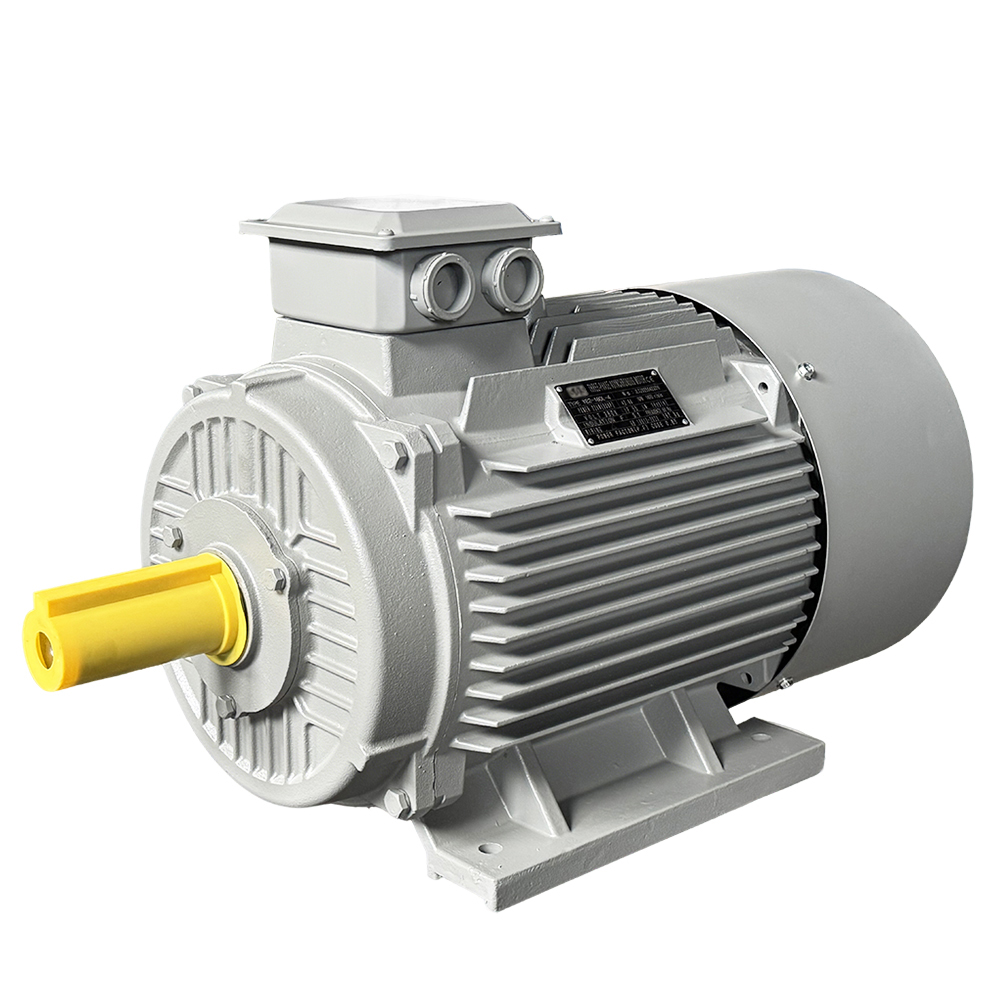
Efficiency gains do not happen by magic. They require fundamental changes in physical construction. Higher tiers utilize significantly more active materials to achieve their performance ratings.
Manufacturers utilize thinner stator laminations in advanced units. This specific structural change reduces eddy currents. They also incorporate higher-grade copper to lower electrical resistance. Engineers optimize cooling fan designs to reduce mechanical friction and windage. These physical modifications directly reduce I²R (iron and copper) losses. Less energy escapes as wasted heat. The equipment converts far more electrical power into mechanical torque.
Better materials often increase the overall footprint. Higher efficiency units usually weigh more. They might feature slightly larger frames or longer bodies. This creates practical implementation realities on the factory floor. You must verify spatial constraints before replacing older NEMA or IEC frames. A drop-in replacement is rarely guaranteed when jumping two efficiency tiers.
An energy saving industrial motor inherently runs cooler due to lower internal losses. Reduced heat extends winding insulation life dramatically. It also protects bearings from thermal degradation. This lowers your annual maintenance expenses. Cooler operation means fewer unplanned shutdowns and longer intervals between routine servicing.
Feature / Attribute | IE2 Class | IE3 Class | IE4 Class |
|---|---|---|---|
Active Materials | Standard grade laminations and copper. | Thinner laminations, increased copper fill. | Premium steel alloys, optimized rotor design. |
Operating Heat | High heat generation. | Moderate heat generation. | Very low heat generation. |
Frame Size Impact | Standard baseline dimensions. | Occasional increase in length or weight. | Noticeable weight increase; larger footprint likely. |
Maintenance Needs | Standard intervals (bearings degrade faster). | Reduced frequency due to cooler running. | Minimal thermal wear; longest bearing life. |
Evaluating the financial impact of a motor upgrade requires looking past the invoice. You must analyze the total lifecycle economics to uncover the true value of high-efficiency designs.
Many buyers focus solely on the sticker price. This causes poor long-term procurement decisions. Upgrading demands a higher initial capital expenditure (CAPEX). An IE3 unit typically costs 15% to 20% more than an IE2 model. An IE4 unit demands a 20% to 40% premium over an IE3. If you stop your analysis here, the higher tiers look prohibitively expensive.
We must analyze lifetime energy expenses to see the full picture. You need three specific variables to build an accurate calculation model. Gather the motor kW rating, determine the operating hours per year, and find your exact electricity cost per kWh. You calculate energy consumption by multiplying the power output by running hours, divided by the efficiency rating.
Variable Needed | Description | Impact on ROI |
|---|---|---|
Motor Rating (kW) | The physical output capacity of the unit. | Larger motors consume more power, amplifying savings. |
Annual Run Hours | Total hours the unit operates under load per year. | Continuous duty (>6,000 hrs) accelerates the payback period. |
Electricity Rate ($/kWh) | Local utility charges for industrial power consumption. | Higher utility rates drastically shorten the ROI timeline. |
Higher initial CAPEX often scares buyers away. However, an IE4 super efficient motor usually pays for its premium quickly. In continuous-duty applications running 8,000 hours annually, payback on the upgrade premium occurs within 12 to 24 months. After this breakeven point, the ongoing energy savings drop straight to your bottom line. Over a 15-year lifespan, the initial purchase price becomes mathematically insignificant.
High efficiency is not automatically the right choice for every scenario. Consider backup pumps or emergency exhaust fans. These units might run only 500 hours per year. These low-duty-cycle applications will not generate enough energy savings to matter. The ROI will simply not justify the upfront cost. Keep standard units in these specific intermittent roles.
Replacing equipment involves complex engineering realities. You cannot treat advanced motors like basic plug-and-play components.
Lower stator resistance improves overall operational efficiency. However, it creates a significant electrical hurdle during startup. Superior magnetic materials saturate differently upon receiving power. This results in much higher starting currents. Inrush spikes can easily overwhelm older electrical infrastructure during the first few milliseconds of operation.
You must audit your protective equipment beforehand. Replacing an older IE2 model might cause existing circuit breakers to trip immediately upon startup. Magnetic contactors might weld or fail under the sudden electrical load. Plant managers frequently overlook this phenomenon. They assume a matched horsepower rating guarantees electrical compatibility. This assumption leads to costly commissioning delays.
You have several reliable options to ensure safe rollouts. First, evaluate all switchgear ratings and adjust magnetic trip settings where code permits. Second, consider installing soft starters. Third, deploy Variable Frequency Drives. These advanced control technologies manage starting currents effectively. They ramp up power smoothly. They protect your distribution system while maximizing high-efficiency benefits.
Selecting the right equipment requires a structured approach. Use this step-by-step matrix to align your procurement strategy with actual plant needs.
Assess Duty Cycles: Review your operating schedules carefully. Reserve top-tier IE4 models exclusively for operations exceeding 6,000 hours per year. Assign IE3 units to moderate-duty applications.
Check Local Regulations: Ensure baseline compliance everywhere. Verify your local mandates. IE3 serves as the legal minimum in most industrialized regions today.
Evaluate VFD Compatibility: Determine if your application benefits from variable speed control. VFDs amplify the savings of advanced units significantly by matching torque to load demand perfectly.
Audit the Infrastructure: Confirm physical space around the installation site. Check standard frame dimensions carefully. Verify your electrical capacity for handling elevated starting currents.
Initiate a plant-wide efficiency audit immediately. Do not guess which units need replacing. Identify your oldest, lowest-efficiency models first. Target those specific units running the highest annual hours. Use them for your pilot replacement program to prove the financial concept to upper management.
Transitioning your facility to modern standards is a strategic financial decision. It merely masquerades as an engineering one. Proper evaluation requires looking past the initial purchase price to understand long-term operational economics.
IE3 provides safe regulatory compliance and delivers solid baseline savings. Meanwhile, IE4 represents the gold standard for long-term ROI optimization in heavy-duty applications. Your choice ultimately depends on run hours, utility rates, and electrical readiness.
Consult an application engineer today. Run a customized lifecycle analysis for your specific facility. Request a comprehensive sizing audit to identify the best candidates for replacement. Taking proactive steps now will protect your budget against rising energy costs tomorrow.
A: A direct swap is not always possible. Higher efficiency models often feature larger physical frame sizes or increased weight. Additionally, they generate higher inrush currents. You must verify spatial compatibility and audit your existing circuit breakers and contactors to prevent nuisance tripping during startup.
A: No. Cost-effectiveness depends heavily on duty cycles and local electricity rates. If an application runs continuously (e.g., over 6,000 hours annually), an IE4 unit offers an excellent payback period. For intermittent tasks like backup pumps, the energy savings will not justify the higher upfront purchase price.
A: A Variable Frequency Drive (VFD) optimizes energy use by matching motor speed to actual load requirements. In some regions, pairing an older IE2 unit with a VFD fulfills minimum legal compliance loopholes. However, applying a VFD to an IE3 or IE4 unit maximizes overall system savings significantly.
A: Premium efficiency models typically last longer. Because they experience fewer internal energy losses, they run significantly cooler. This temperature reduction minimizes thermal degradation on winding insulation and bearing grease. As a result, higher-tier models generally require less maintenance and offer extended operational lifespans.


