- All
- Product Name
- Product Keyword
- Product Model
- Product Summary
- Product Description
- Multi Field Search


Views: 0 Author: Site Editor Publish Time: 2026-06-17 Origin: Site


Modern industrial facilities face relentless pressure to optimize production while shrinking their operational energy footprints. Upgrading to variable speed equipment demands much more than simply installing a new drive. You must engineer the motor itself to handle altered electrical waveforms and constantly shifting cooling conditions. Running a standard induction motor on a frequency inverter frequently invites catastrophic trouble. Facility managers risk premature winding failure, severe bearing damage, and critical overheating at low speeds. These mechanical failures instantly disrupt production lines and drain limited maintenance budgets.
Our objective is to define the clear commercial and technical justifications for specifying a dedicated variable frequency setup. You will learn a structured framework to evaluate lifecycle returns against initial procurement costs. We will outline essential performance metrics, ensuring you select equipment built for long-term durability. By understanding these core principles, you can confidently build a robust, reliable, and compliant mechanical drivetrain.
Standard motors lack the insulation and thermal capacity required for sustained variable-speed operation.
A purpose-built variable frequency motor prevents costly downtime caused by voltage spikes and bearing fluting.
Pairing the right inverter duty motor with your drive maximizes systemic energy efficiency and extends equipment lifespan.
Proper evaluation requires assessing load types (constant vs. variable torque), operating speed ranges, and installation environment.
Operators frequently attempt to run standard NEMA or IEC motors on modern drives to save initial capital. This strategy usually backfires within months. Standard designs possess inherent physical and electrical limitations. They simply cannot endure the harsh operational realities of variable frequency environments.
Standard induction units rely entirely on shaft-mounted cooling fans. Fan speed directly dictates the volume of cooling airflow. When you reduce the operational RPMs to accommodate process demands, cooling capacity plummets exponentially. However, heat generation from internal electrical losses remains dangerously high. This massive imbalance causes rapid thermal degradation. Windings literally cook themselves when operated at low speeds for extended periods. You experience premature failure because the internal temperature quickly exceeds safe design limits.
Modern drives utilize Pulse Width Modulation (PWM). They convert alternating current to direct current, then chop it using insulated-gate bipolar transistors (IGBTs) to simulate an AC waveform. This constant chopping creates sharp, high-frequency voltage transients. Standard insulation systems cannot withstand these repetitive harsh spikes. Voltages can briefly spike to over 1500 volts on a standard 480-volt system. Over time, you observe corona discharge within the windings. This electrical stress phenomenon inevitably leads to microscopic pinholes in the insulation and catastrophic short circuits.
Bearing degradation acts as a silent killer in retrofitted systems. Drives naturally induce common mode voltage on the stator frame. Electricity always seeks the path of least resistance to ground. It routinely travels down the rotating shaft, straight through the bearing elements. The voltage arcs across the thin layer of bearing lubrication. This arcing blasts microscopic pits into the metal races. Engineers refer to this as electrical fluting. You will typically hear a loud whining noise shortly before complete bearing seizure occurs.
Facility managers often retain standard motors to preserve capital budgets. The perceived financial savings vanish incredibly quickly. Unplanned downtime, immediate emergency replacement costs, and lost production hours erase any initial procurement gains. Replacing a failed unit halts operations, requires emergency labor rates, and damages overall facility productivity.
Purpose-built equipment solves the fundamental problems of modern electronic control. Manufacturers engineer these units from the ground up to thrive in harsh electrical environments.
Robust insulation systems form your primary line of defense. Engineers build these specific units using superior Class F or Class H insulation materials. They apply multiple layers of enhanced resin coatings to the magnet wire. They integrate extra phase paper to separate distinct winding bundles. They also utilize advanced vacuum pressure impregnation (VPI) varnishing processes to prevent wire micro-movement. This heavy-duty construction effectively resists the repetitive high-voltage spikes generated by PWM switching frequencies.
Advanced thermal management completely resolves the low-speed cooling dilemma. These units safely maintain optimal operating temperatures across vast speed ranges. Manufacturers often integrate independent cooling blowers, known as forced ventilation. These auxiliary fans operate on separate power feeds. They blow maximum air volume across the housing even when the primary shaft barely turns. This specialized cooling guarantees safe, continuous low-speed and high-torque operations.
When you deploy an energy saving variable speed motor, facility-wide energy efficiency skyrockets. It flawlessly aligns electrical power consumption to real-time mechanical load demands. These integrated designs easily meet and exceed strict governmental energy compliance standards. They frequently achieve top-tier energy equivalencies for industrial applications. You stop paying for wasted power during partial load conditions.
Mechanical longevity protects your entire downstream drivetrain. Electronic control provides impeccably smooth acceleration and deceleration curves. This precise motion dramatically reduces harsh mechanical shock during startup. It protects delicate pumps, large centrifugal fans, and heavily loaded conveyors. You significantly decrease the routine wear and tear on expensive couplings, gearboxes, and drive belts.
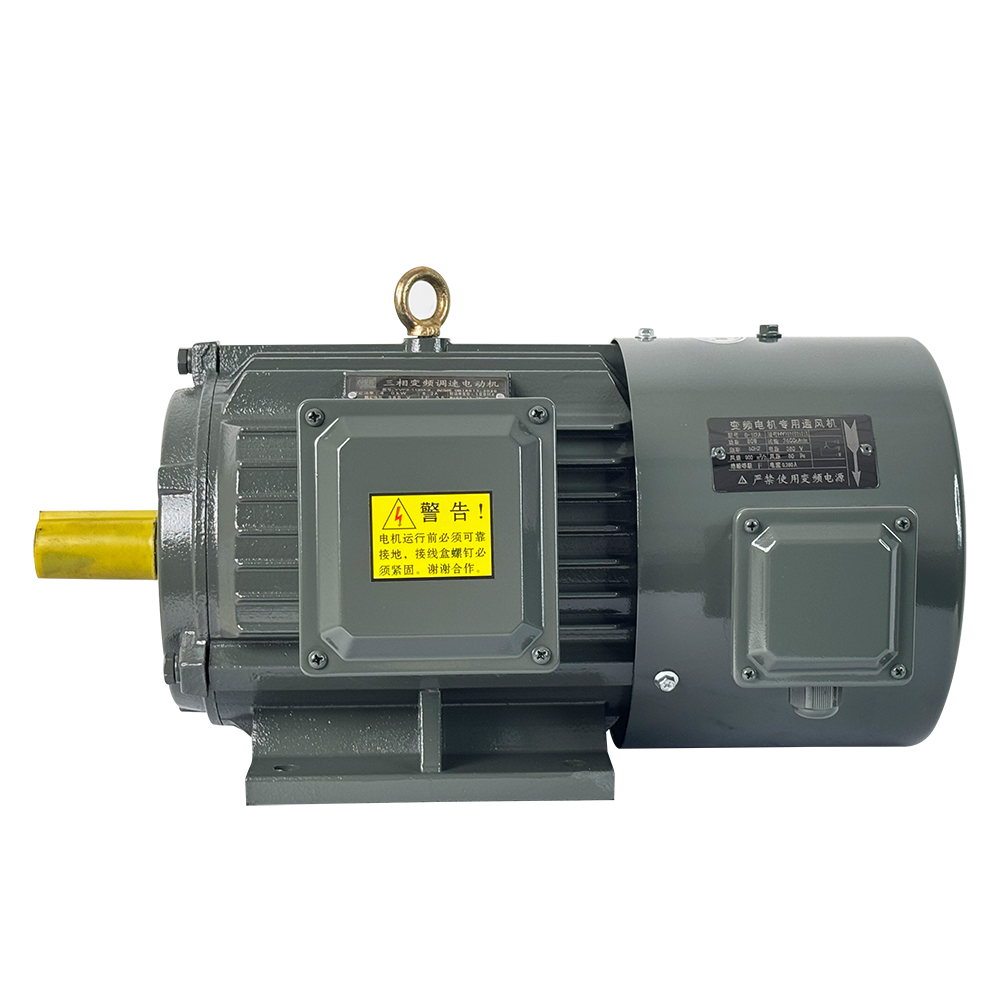
You face several choices when designing speed-regulated systems. Understanding how modern electronic solutions compare to older technologies ensures you select the correct control architecture.
Traditional mechanical VSD systems use variable pitch sheaves, hydraulic fluid couplings, and adjustable belts to change output speeds. These physical components slip, wear down constantly, and require intensive manual adjustment. Electronic frequency control entirely eliminates these wear-prone mechanical parts. You no longer worry about snapping belts or leaking fluid couplings. They offer vastly superior speed precision and demand drastically lower routine maintenance.
Soft starters effectively reduce massive inrush currents during initial equipment startup. They utilize thyristors to slowly ramp up voltage. However, once the equipment reaches base operational speed, built-in contactors bypass the electronics entirely. Soft starters absolutely cannot provide continuous speed regulation. You require a true adjustable speed ac motor system to execute dynamic, real-time process control.
Industry terminology frequently confuses procurement teams. You must clearly distinguish between "Inverter Ready" and true inverter duty designs. "Inverter Ready" typically implies the manufacturer merely applied slightly upgraded winding insulation. It lacks necessary cooling adaptations. Conversely, a genuine inverter duty motor includes comprehensive thermal overhauls and strict bearing protections. You need these high-end features to survive demanding, wide-ranging speed applications safely.
Certain industrial applications naturally yield faster financial returns. You must analyze your load types to predict energy savings and operational improvements accurately.
Centrifugal loads provide the absolute highest potential for rapid energy savings. They obey the fundamental Affinity Laws of physics. Power consumption varies with the cube of the operating speed. Minor reductions in rotational speed yield massive, exponential drops in energy consumption. Slowing a centrifugal fan by just 20% slashes its required electrical power by nearly 50%. You capture tremendous utility savings in HVAC and municipal pumping operations.
Positive displacement pumps, extruders, and heavy industrial conveyors require constant torque profiles. They demand their full rated twisting force regardless of how fast they spin. They often need massive torque at zero or near-zero speeds. A purpose-built unit delivers this aggressive mechanical force safely without melting its internal windings.
Cranes and heavy hoists represent highly dynamic, demanding scenarios. Specialized drives provide incredibly precise load micro-positioning. They utilize dynamic braking resistors to safely hold and lower massive weights. This approach practically eliminates the intense physical brake wear inherent in traditional single-speed lifting operations.
When calculating your overall financial return on investment, you must factor in localized energy pricing tiers. Incorporate any available utility rebates for high-efficiency system upgrades. Crucially, compare the proposed investment against the known historical failure rates of your current equipment. You will find the combined maintenance offset and power reduction highly favorable.
Application Category | Torque Characteristics | Common Equipment Examples | Primary Benefit Achieved |
|---|---|---|---|
Variable Torque | Torque changes with speed | Centrifugal pumps, HVAC fans, blowers | Massive exponential energy savings |
Constant Torque | Torque remains uniform | Conveyors, extruders, mixers, compressors | Full mechanical force at zero speed |
Constant Power | Power remains uniform above base speed | Machine tools, winders, large drills | High-speed precision control |
Proper specification requires rigorous attention to electrical details. Ignoring secondary phenomena like shaft currents or reflected waves guarantees premature failure.
Bearing protection mandates serious engineering attention. You must actively specify mitigation techniques to stop fluting.
Grounding Rings: Install shaft grounding rings, such as AEGIS rings, to provide a low-impedance path to ground.
Insulated Bearings: Use ceramic-coated bearings on the non-drive end to physically block current flow.
Grounding Straps: Ensure the drive, motor frame, and driven load share a massive, unified ground plane.
Long electrical cable runs between the drive panel and the machine amplify dangerous voltage spikes. A physical phenomenon called reflective standing waves doubles the transient voltage right at the terminal box. Your engineering evaluation must include appropriate electrical filtering. Factor in the cost of adding load-side line reactors or specialized dV/dt filters to protect your new equipment.
You must ensure flawless sizing by selecting a perfectly VFD matched motor. Never size your system relying solely on peak horsepower ratings. Calculate the exact continuous torque requirements at the lowest intended operating RPM. If a machine runs constantly at 10% speed, it requires a dramatically larger physical frame to dissipate heat compared to a unit running at 100% speed.
Follow strict technical logic during your procurement cycle. Focus your purchasing power on vendors providing transparent, verifiable engineering data.
Demand clear turndown ratio guarantees. Look for proven 1000:1 ratios for variable torque loads and at least 20:1 for constant torque applications.
Verify thermal performance data. Ask for certified testing reports showing safe winding temperatures at minimum speeds.
Check insulation certifications. Ensure the manufacturer explicitly guarantees compliance with NEMA MG1 Part 31 standards for inverter operation.
Investing in a dedicated Variable Frequency Motor fundamentally shifts your operational strategy. You move from merely forcing equipment to spin slower, to engineering a highly reliable, compliant, and extraordinarily efficient drivetrain. Taking a systematic approach protects your capital investments.
First, audit your current variable speed systems immediately. Identify standard units suffering from chronic winding failures, excessive heat, or noisy bearings. Next, calculate the lifecycle energy savings and the lucrative maintenance offset of upgrading to specialized units. Finally, consult directly with an integration specialist. They can verify your required turndown ratios, calculate necessary cable filtering, and specify the exact heavy-duty rating you need to guarantee continuous production.
A: It features severely upgraded internal insulation, enhanced thermal capacity, and specific mechanical bearing protection. Standard units lack these crucial adaptations. Inverter-rated models utilize heavy-duty Class F or Class H insulation specifically to withstand repetitive high-frequency voltage spikes. They also incorporate specialized constant-velocity cooling fans to prevent critical overheating during prolonged low-RPM operations.
A: Yes, but you face immediate and severe operational limitations. Standard motors struggle massively with reduced cooling airflow at lower speeds. They also suffer from rapid insulation breakdown due to electrical voltage transients. If you decide to use one, you must heavily restrict the speed range, minimize electrical cable lengths, and accept a drastically reduced lifespan.
A: The motor itself acts as a critical facilitator. It allows the drive controller to optimize power usage without internally destroying the equipment. True utility savings happen because you accurately match operating speed perfectly to your actual load demand. This precise speed matching permanently eliminates the vast energy waste found in traditional full-speed operations.
A: A turndown ratio dictates the absolute operational limits of your control system. It defines the lowest speed the equipment can safely sustain over time. At this extreme low speed, it must still deliver the required mechanical torque without melting its windings. A 1000:1 ratio means excellent low-speed stability, which is essential for demanding industrial applications.


