- All
- Product Name
- Product Keyword
- Product Model
- Product Summary
- Product Description
- Multi Field Search


Views: 0 Author: Site Editor Publish Time: 2026-06-21 Origin: Site


Pouring concrete seems straightforward during the initial placement phase. However, the true test happens when crews finally strip the forms. Hidden air pockets weaken building structures instantly. Improper concrete consolidation poses a massive structural risk. It creates severe honeycombing and weak cold joints. It consistently leads to failed engineering inspections. These critical defects guarantee costly, time-consuming rework. You must never treat poor consolidation as a simple on-site mistake. It threatens overall project viability.
A reliable Concrete Vibrator Motor acts as the core driver of quality assurance. It completely eliminates entrapped air. It ensures maximum material density across the entire pour. This guide transitions from basic definitions to an advanced procurement framework. We outline specific commercial project applications. We match distinct motor types to your daily operational realities. You will learn exact criteria for evaluating vendor specifications. This targeted knowledge empowers your teams to make better purchasing decisions.
Application Matching: Selecting between an internal and external vibrator motor depends entirely on formwork complexity, rebar density, and concrete slump.
Performance Metrics: Evaluation must prioritize Vibrations Per Minute (VPM), amplitude, and consolidation radius over sheer horsepower.
Risk Mitigation: Preventing motor burnout and avoiding concrete segregation are the top operational priorities requiring strict operator guidelines and durable equipment selection.
Total Cost of Ownership: Initial unit cost is secondary to maintenance intervals, bearing quality, and continuous-run capabilities in commercial construction.
Optimizing your consolidation strategy prevents catastrophic structural failures. Fresh concrete naturally contains massive amounts of trapped air. Voids often comprise 5 to 20 percent of the total pour volume before vibration. Consistent motor operation forcefully expels these air bubbles to the surface. Removing this excess air directly increases structural compressive strength. Industry studies show a five percent strength drop for every one percent of trapped air. Effective vibration binds the cement paste tightly against coarse aggregates. It ensures a uniform, rock-solid structural element. You completely prevent surface blemishes like honeycombing.
Engineering teams enforce strict concrete specifications on every job site. Passing structural integrity tests demands precise equipment operation. Inspectors routinely core sample cured structures to verify density. A single failed core test halts your entire project immediately. Proper consolidation proves your adherence to safety and compliance standards. It guarantees the building performs under maximum engineered loads. You protect your firm from future liability claims.
Labor efficiency also relies heavily on equipment quality. High-efficiency motors drastically reduce active pour times. Fast, effective consolidation keeps heavy pump trucks moving. Crews finish large slabs and tall columns quicker. You also minimize manual patching after form-removal. Workers spend less time grinding bug holes or applying cosmetic grout. Efficient consolidation cuts labor hours significantly. It keeps your project schedule firmly on track.
Different construction environments demand specific equipment setups. You must match the tool to the structural requirements.
Deep foundation pours involve massive, continuous material volumes. They require heavy-duty, high-frequency internal motors. You must consolidate deep lifts quickly to prevent cold joints. Low-slump concrete presents a major challenge in deep caissons. Weak motors stall under the heavy mud load. High-frequency units maintain stable speeds inside dense mixes. They ensure strong paste bonds around congested rebar cages.
Precast plants operate in highly controlled environments. They rely entirely on formwork-mounted equipment. You need an external vibrator motor for these specialized tasks. It bolts securely directly to steel molds. It shakes the entire form to consolidate the stiff mix. This action achieves flawless architectural-grade surface finishes. It leaves internal reinforcement grids completely undisturbed. You get perfect precast panels and retaining walls every time.
Small residential foundations require speed and flexibility. Operators heavily favor a portable concrete vibrator for these jobs. Backpack units or handheld battery models offer unmatched maneuverability. Operators walk easily across large surface areas. They navigate confined footing trenches effortlessly. Battery-powered options remove hazardous tripping cords from the site.
Highway and bridge construction demands complex consolidation strategies. Teams utilize a combination of motor types here. Deep structural pillars need powerful internal vibration. Wide, flat bridge decks require specialized surface vibration. Screed motors level the concrete deck while removing trapped air. They provide a smooth, durable driving surface resistant to freeze-thaw cycles.
Deep Foundations: Require large-diameter heads and high torque.
Precast Molds: Require high-frequency external mounting brackets.
Slab Paving: Require lightweight, highly mobile backpack units.
Bridge Decks: Require wide surface screed consolidation.
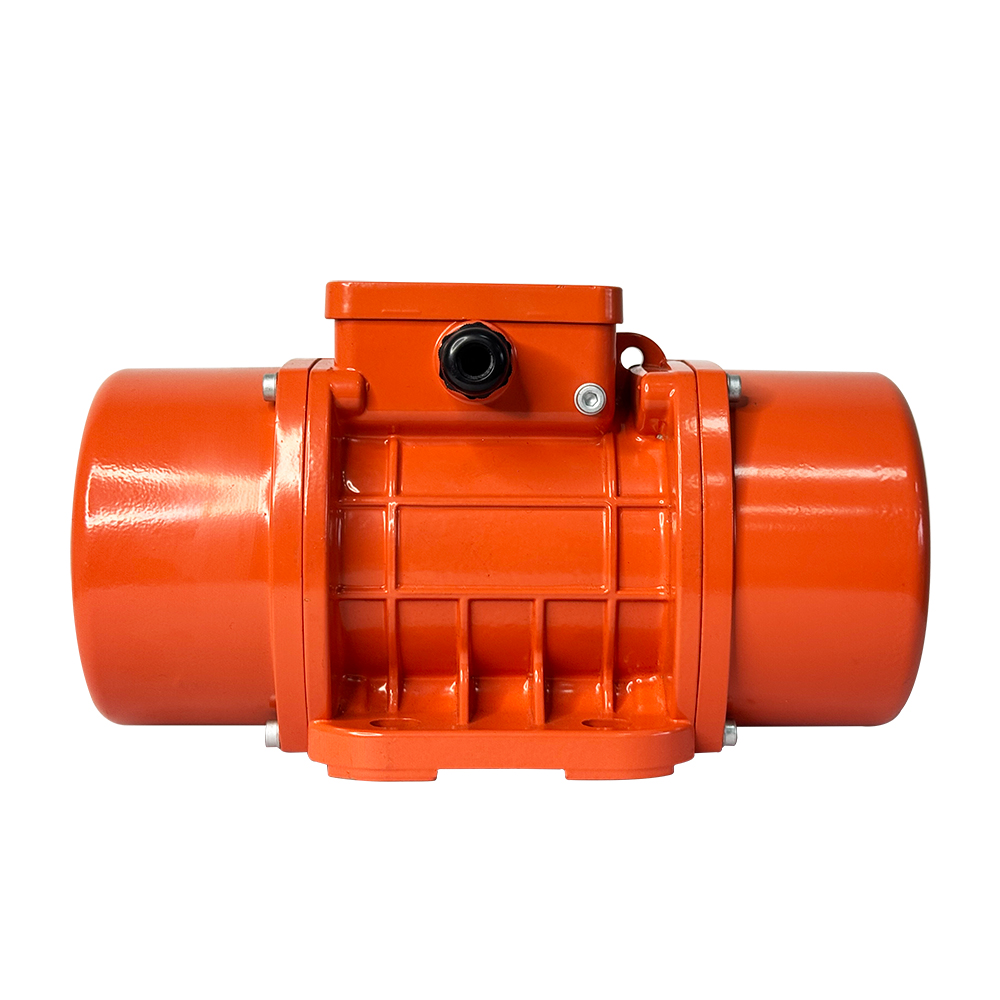
You face two primary choices when selecting consolidation tools. Understanding their physical limitations prevents poor job execution.
This remains your primary tool for most structural jobs. It works best for standard columns, walls, and flat slabs. An internal vibrator motor plunges directly into the wet mix. It transfers energy outward from the central metal head.
Selection Logic: You must size the poker head correctly. The head must slide between rebar grids easily. Typical commercial head sizes range from one to three inches. The motor's consolidation radius dictates the insertion spacing pattern. A larger head radius means fewer insertions for the operator. You speed up the process significantly.
Limitations: The harsh concrete mix causes intense abrasive wear. Metal heads and flexible shafts degrade over time. Success also depends heavily on specific operator skill. Poor technique leaves invisible structural voids behind.
Some structural jobs completely restrict internal access. Congested rebar columns block needle insertion entirely. Tunnel linings and complex precast molds present similar physical hurdles.
Selection Logic: You mount these units directly to the exterior framework. You must match the motor output to the formwork rigidity. The setup must transfer vibration energy efficiently into the wet concrete. It cannot waste kinetic energy simply shaking loose brackets.
Limitations: This method requires robust formwork engineering. Standard timber plywood shatters under the intense stress. Forms must withstand severe external vibration forces. You need heavy-duty steel or specialized reinforced timber forms.
Procurement teams must look beyond simple horsepower ratings. You must evaluate the underlying engineering specifications.
These two metrics dictate consolidation success. They share an inverse mechanical relationship. High frequency usually pairs with lower amplitude. Low frequency pairs with much higher amplitude. High frequency tools (10,000+ VPM) move sand and mortar paste effectively. High amplitude tools forcefully move heavy, coarse aggregates. Both must align perfectly with your specific concrete mix design. Stiff mixes demand high amplitude. High-slump, fluid mixes demand high frequency.
Choosing the right power source directly impacts daily field operations. Each option carries distinct logistical requirements.
Electric Models: They provide steady, consistent power for stationary sites. They run all day without fading. However, they require highly reliable site generators. Thick extension cords pose severe cable management risks.
Battery/Portable Models: Cordless tools offer ultimate site mobility. You avoid tangled cords completely. Yet, they face strict limited runtime constraints. You must evaluate amp-hour ratings carefully against expected continuous pour durations.
Pneumatic Models: Air-driven tools boast extreme mechanical durability. They lack fragile electrical components. They operate safely in wet or hazardous environments. However, they demand heavy, expensive air compressors on site.
Active construction sites quickly destroy fragile power tools. Look specifically for oversized rotor bearings. Demand double-insulated electrical housings to protect operators. Heat-dissipating motor casings actively prevent mid-pour failures. Specifying a reliable construction vibration motor requires checking these physical details. Do not buy tools encased in cheap plastic housings. Choose cast aluminum or reinforced impact-resistant polymer.
Power Source | Primary Advantage | Core Limitation | Best Project Application |
|---|---|---|---|
Electric (120V/240V) | Continuous, fade-free power | Requires generators and long cords | High-rise columns, large slabs |
Battery (Lithium-Ion) | High mobility, zero trip hazards | Limited continuous runtime | Residential footings, tight trenches |
Pneumatic (Air-Driven) | Extreme durability, no shock risk | Requires large air compressors | Heavy civil works, damp environments |
Even the finest equipment fails when handled poorly. You must train operators to recognize field risks.
Concrete consolidation requires timed precision. Poorly trained operators often cause massive structural damage. They leave high-powered motors sitting in one spot too long. This error creates severe aggregate segregation. Heavy stones sink quickly to the bottom of the form. Water and fine cement paste pool at the top surface. We call this weak, watery surface layer laitance. It severely compromises structural integrity. It causes rapid concrete scaling later. Train your crews to follow correct insertion times.
Equipment failure rates run high on fast-paced commercial jobs. Internal motors overheat when misused by rushed crews. You must never run internal types completely out of the concrete. The wet concrete mix acts as a necessary fluid coolant. Running them in open air causes rapid thermal overload. Stator windings melt down quickly. Bearings seize up permanently. Operators must shut units off between insertions.
You must enforce strict routine maintenance checks. Equipment needs preventative care before major structural pours. Implement a rigid daily checklist. Lubricate the flexible drive shafts regularly. Inspect housing bearings for unusual grinding noises. Audit electrical cord integrity daily. Frayed cords present fatal electrical shock hazards. Check all switch seals for water damage. Proactive maintenance prevents disastrous tool breakdowns mid-pour.
Check shaft lubrication levels before every shift.
Inspect poker heads for severe diameter wear.
Verify all electrical connections remain fully watertight.
Clean dried concrete off motor housings immediately.
Effective procurement decisions require a highly structured evaluation framework. Define your primary project application first. Decide whether you handle precast molds or active site pours. Determine your on-site power availability before shopping. Specify the necessary VPM and amplitude based strictly on your standard mix designs. Matching the tool to the task ensures optimal concrete density.
Do not finalize purchases blindly. Encourage your procurement team to request operational demonstration data. Review equipment warranty terms strictly for commercial use. Audit the vendor to ensure fast local availability of replacement shafts and heads. Strong vendor support keeps your projects moving forward. Act now to upgrade your site consolidation protocols and eliminate structural defects entirely.
A: The consolidation radius typically equals four times the diameter of the vibrator head. A two-inch head affects an eight-inch radius around it. This metric dictates your precise insertion spacing. Operators must overlap these radiuses slightly to ensure total coverage and eliminate all trapped air pockets.
A: Runtime depends heavily on battery capacity and tool thermal limits. High-capacity lithium batteries typically provide 30 to 45 minutes of continuous trigger time. However, thermal thresholds require operators to allow intermittent cooling periods. Always carry backup batteries to sustain continuous pour schedules without delays.
A: No. External vibration transfers violent kinetic energy directly into the forms. Standard plywood cannot absorb this stress and will shatter or warp rapidly. You must use heavy-duty steel or specially reinforced timber forms. Proper formwork engineering prevents blowouts and ensures energy reaches the wet concrete.
A: Power loss usually stems from three common issues. First, voltage drop occurs when crews use excessively long or thin extension cords. Second, electric motors suffer from worn carbon brushes after heavy daily use. Finally, internal bearing failure creates mechanical drag, severely reducing operational RPMs and consolidation effectiveness.


